
Panel Discussion on Women’s Networks in Cycling in Austria
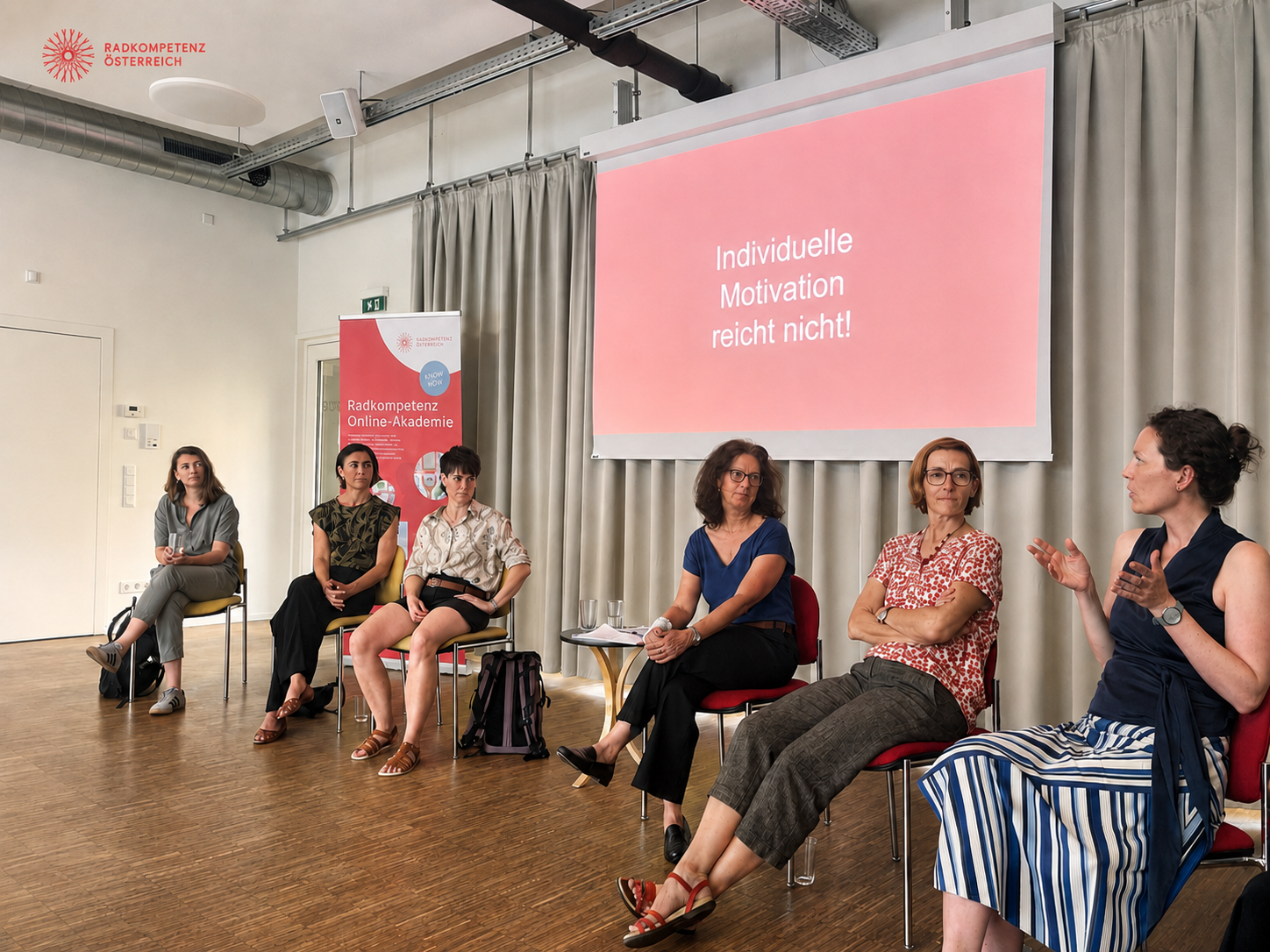
The annual Cycling Competence Austria Roundtable took place on 23 June in Vienna for the first time as an open forum addressing the visibility and participation of women in the cycling sector and related fields. Under the title “More Women. More Perspectives. More Cycling Competence,” a high-profile panel of experts from Cycling Competence Austria member organisations and invited speakers discussed the role of women in shaping the cycling industry. During the following discussion, participants shared perspectives and explored potential actions to diversify the sector and enhance women’s participation, contributing to increased cycling engagement in Austria.
More Perspectives Lead to Better Decisions
The mobility transition can only succeed if it is inclusive – if all stakeholders are engaged and collaborate to implement solutions to reduce CO₂ emissions in transport. The panel examined how women in the cycling sector are involved in applied product development, target-group-specific planning, and access to decision-making bodies and career paths, drawing insights from multiple professional disciplines.
Women in Cycling Networks Across Europe
Women in Cycling networks are gaining momentum across Europe and neighbouring countries, highlighting the need for greater visibility, representation, and influence of women within the sector. These networks also demonstrate the potential for enhanced participation by women in cycling and the creation of a more diverse and professional industry.
Panel and Experts
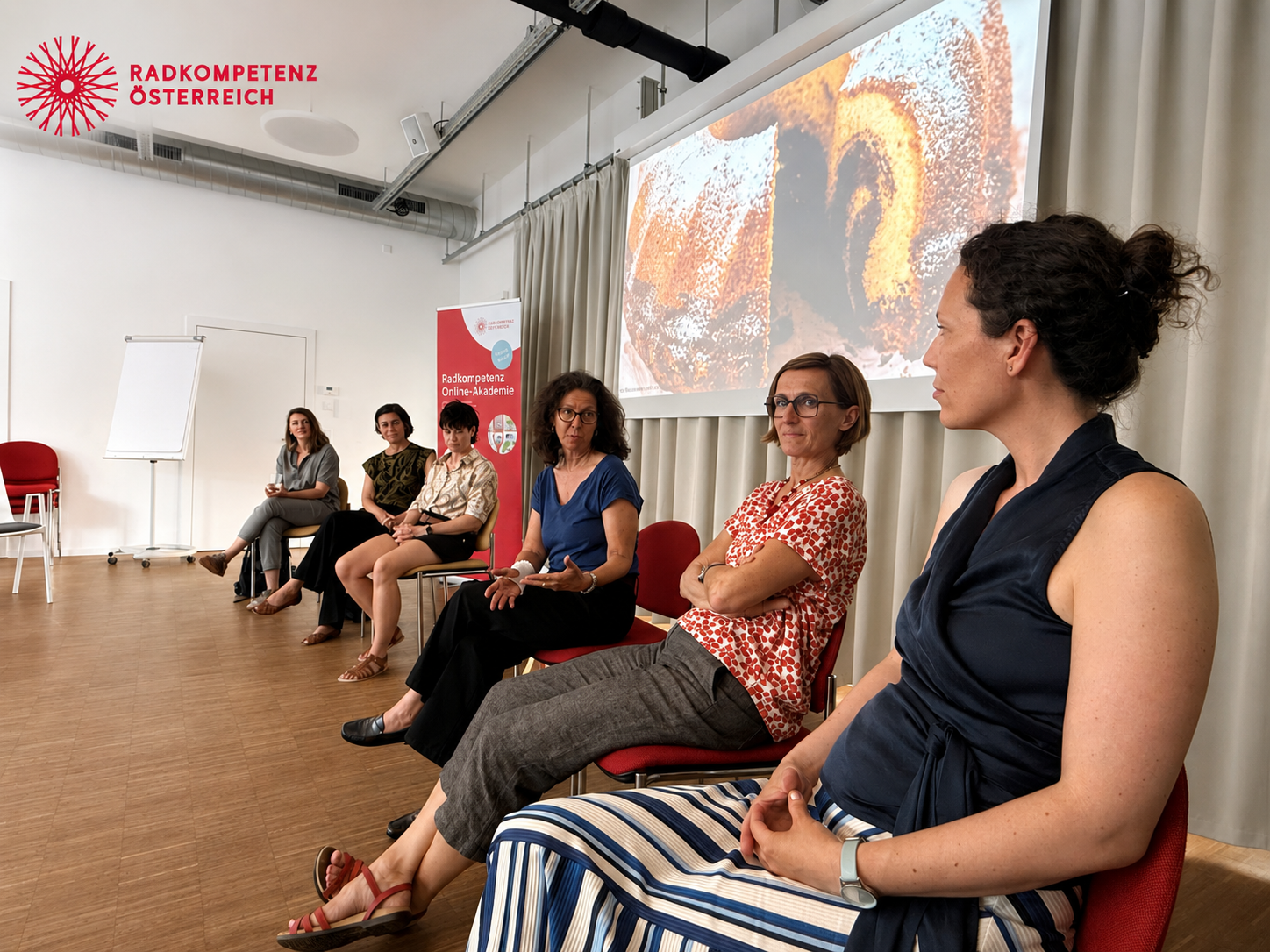
Cycling Competence Austria Forum 2026, Verein Gräztelmixer, Vienna (from left to right): Petra Sturm, Elke Schimmel, Katrin Batko, Olivia Kantner, Christine Zopf-Renner, Karin Markvica
Designing cycling infrastructure and structures that meet real-world needs requires shared objectives and collaboration across disciplines. Olivia Kantner, Managing Director and Transport Planner at Cycling Competence Austria member komobile, moderated the discussion with representatives from transport planning, research, industry, public administration, and cultural history.
Key practical questions provided insights into the current status across disciplines and informed the development of recommendations for research, planning, and governance. All participants agreed that considering women’s specific needs is a core quality factor for a robust cycling sector in Austria.
Focus on Practical Insights
The open forum encouraged dialogue and informal networking, enabling participants to exchange ideas with experts from Cycling Competence Austria and external stakeholders. The six panelists shared their perspectives, which were discussed with all participants based on key questions and expectations.
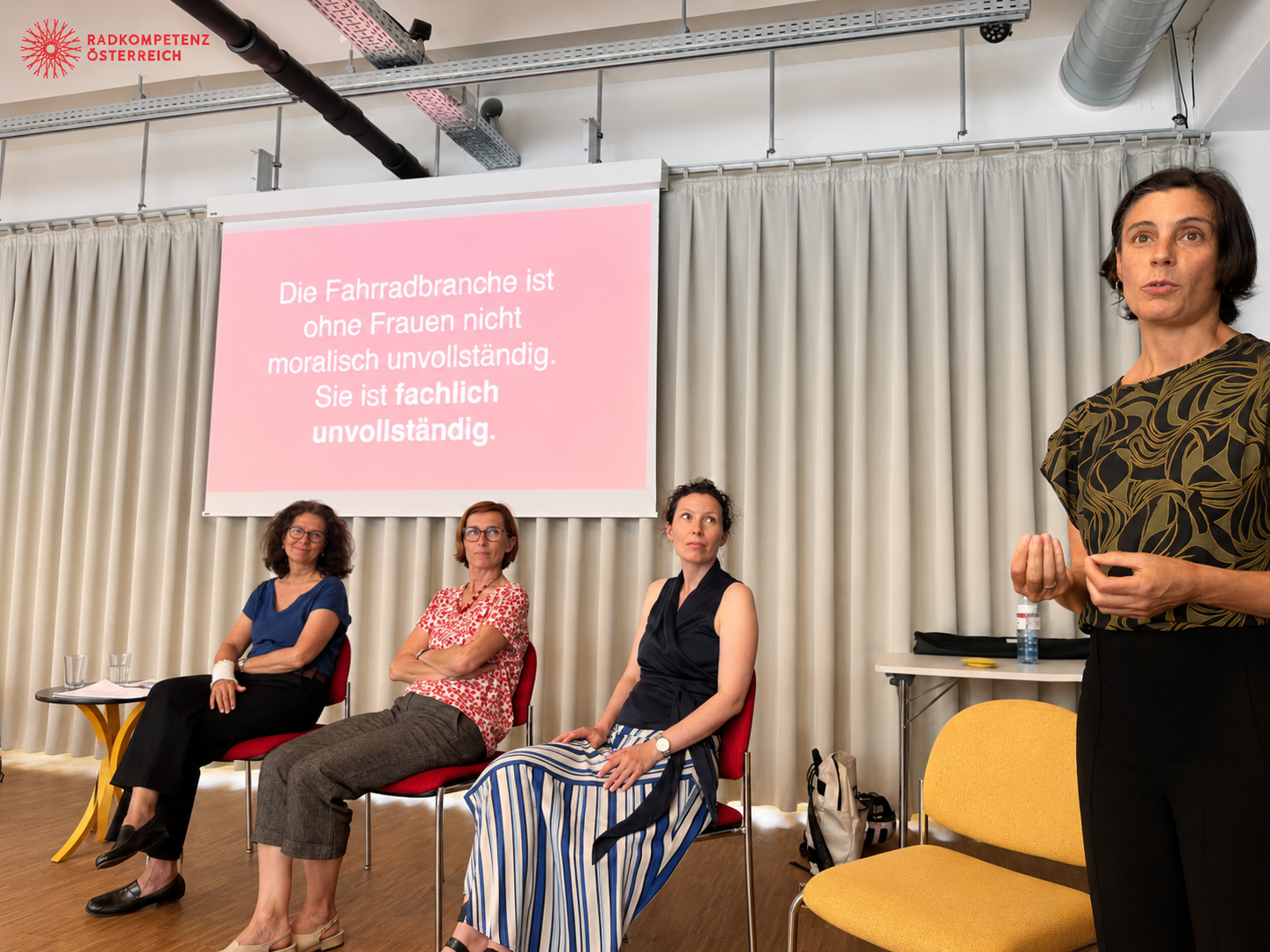
- Elke Schimmel, cycling planner at november:city (Netherlands) and founding member of Women in Cycling Switzerland, presented a European overview using the latest 2025 data on women in the cycling industry (University of Kassel). She emphasised:
“Without women, the cycling sector is not only morally incomplete; it is professionally incomplete.” - Karin Markvica, researcher at Cycling Competence Austria member AIT – Austrian Institute of Technology, Centre for Mobility Systems, highlighted the importance of a holistic approach to data collection and defining key indicators for future mobility and infrastructure measurements.
- Christine Zopf-Renner, Head of the Mobility Centre Burgenland, shared her experiences in male-dominated fields and emphasised the importance of encouraging young women to pursue careers in cycling-related sectors.
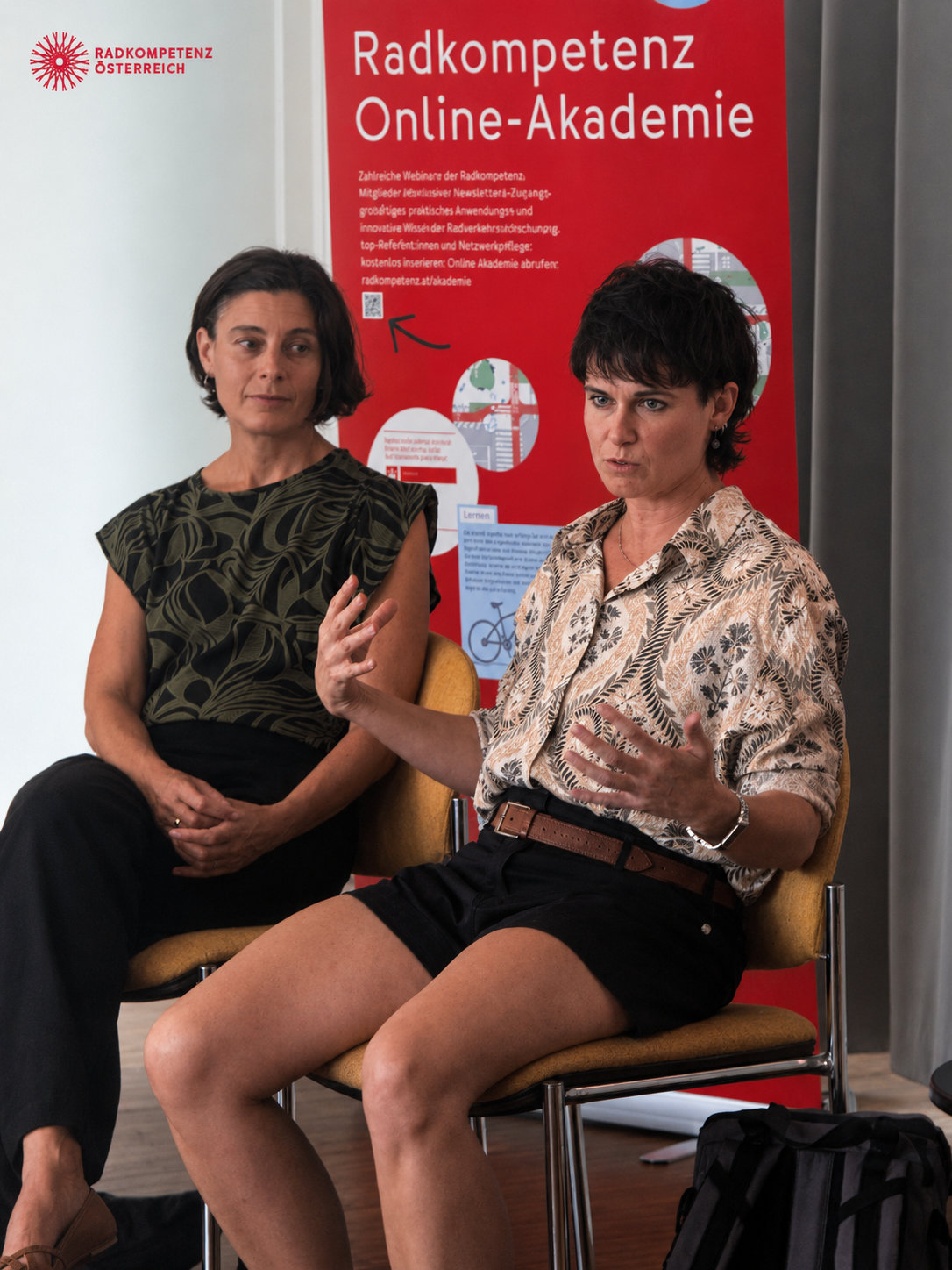
- Katrin Batko, Cycling Competence Austria member VELLO Bike, manages brand and product experiences, retail concepts, and product communication, and is also active in product development. She presented her TMBR Scooter project, a functional wooden e-scooter prototype, highlighting gender-equitable mobility, accessible products, and inclusive design principles.
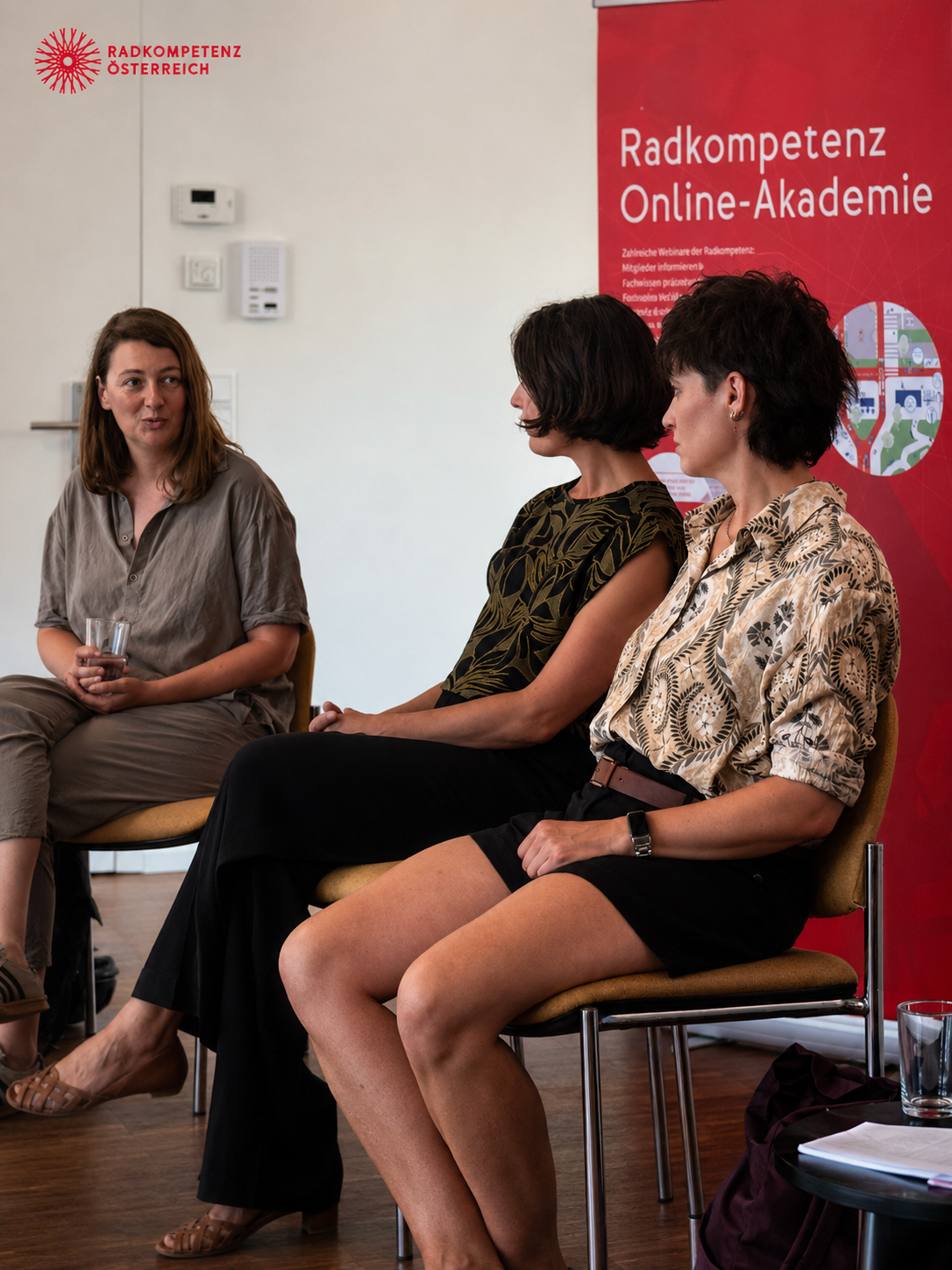
- Petra Sturm, cycling historian, explores feminist perspectives in sports, particularly cycling, and noted that historical women’s biographies often emerge only through external events such as the #MeToo movement, highlighting the importance of preserving these contributions in the societal knowledge base.
Key Discussion Themes
- Where women are visible and influential in the cycling sector
- Where contributions remain largely invisible
- Blind spots in planning, research, administration, industry, and communication
- Gaps between needs and reality – from both users’ and designers’ perspectives
- The role of strategic decisions, budgets, power, and public visibility
The discussion also addressed how networks, invitation practices, and event formats can sustainably empower women and prevent existing structures from repeatedly reproducing the same perspectives.
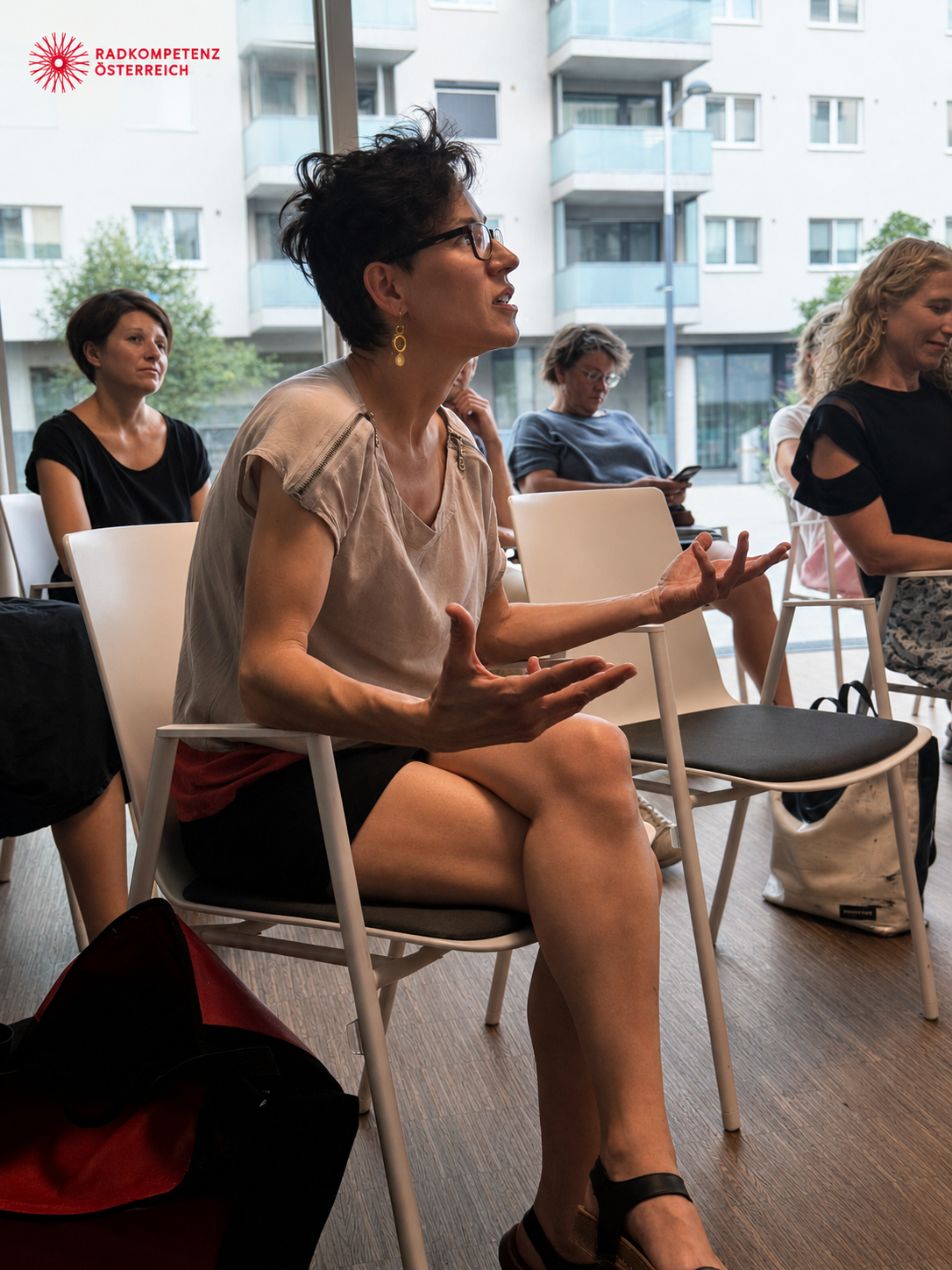
Audience discussion (from left to right.): Bettina Dornhofer-Pöllinger (Herry Consult), Margarethe Staudner (Umweltbundesamt), Valerie Madeja (Radlobby Austria), Beate Hauser (Goodville Mobility).
Platforms such as Cycling Competence Austria help broaden access, increase visibility, and actively integrate new voices. The aim is to harness diverse perspectives to develop better, more robust solutions for cycling and the cycling sector.
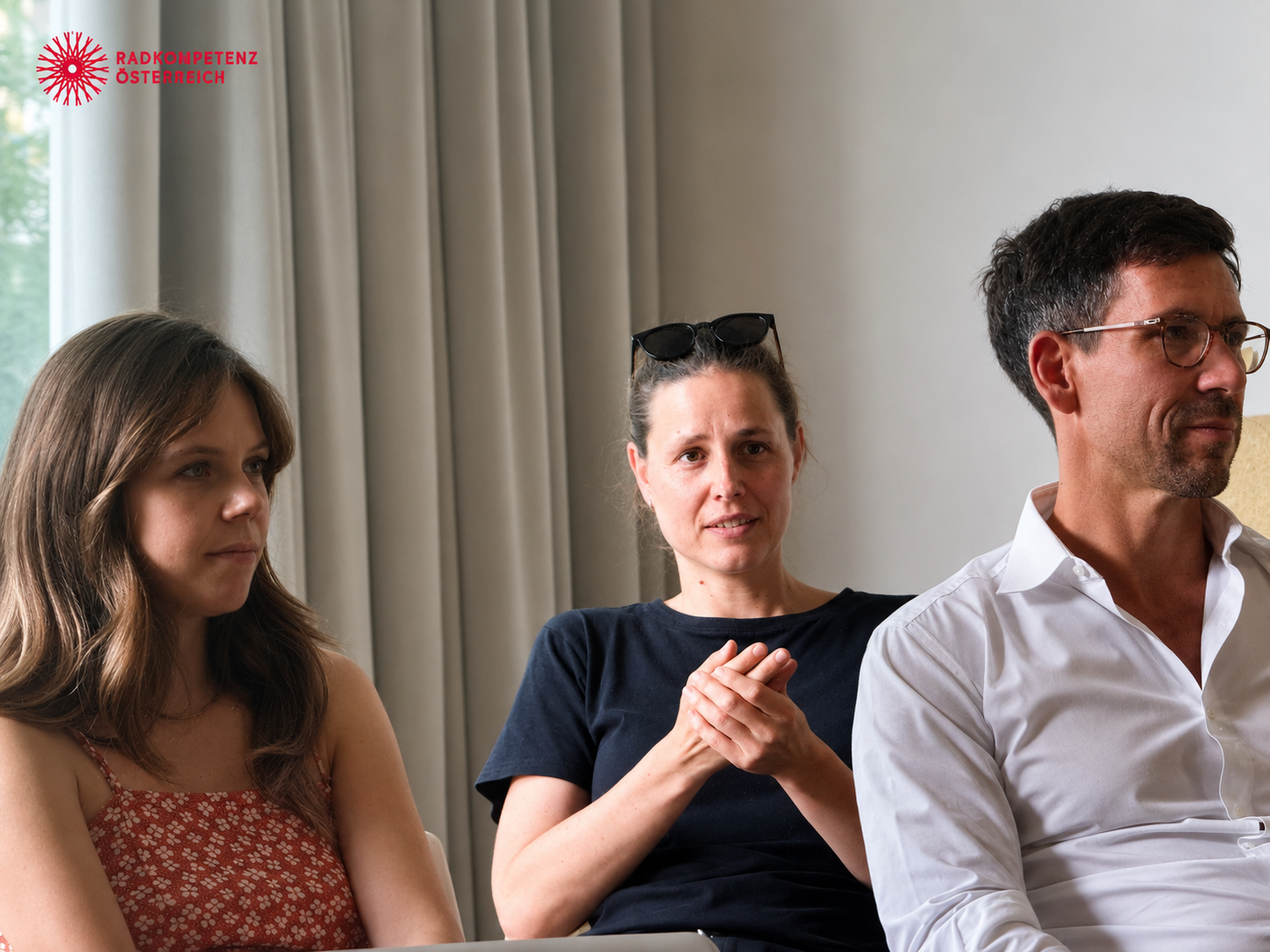
Audience discussion (f.l.t.r.): Luise Lehfeldt (Lease a Bike Austria), Nicole Tippelt (Regionalmanagement OÖ), Alexander Zalokar (Lease a Bike Austria).
Women’s Network in Cycling Austria: Expectations and Potential
Analysis of the key questions from the second part of the panel highlights the envisioned network’s role: pooling expertise, increasing women’s visibility, and strengthening their influence across planning, governance, policy, and industry.
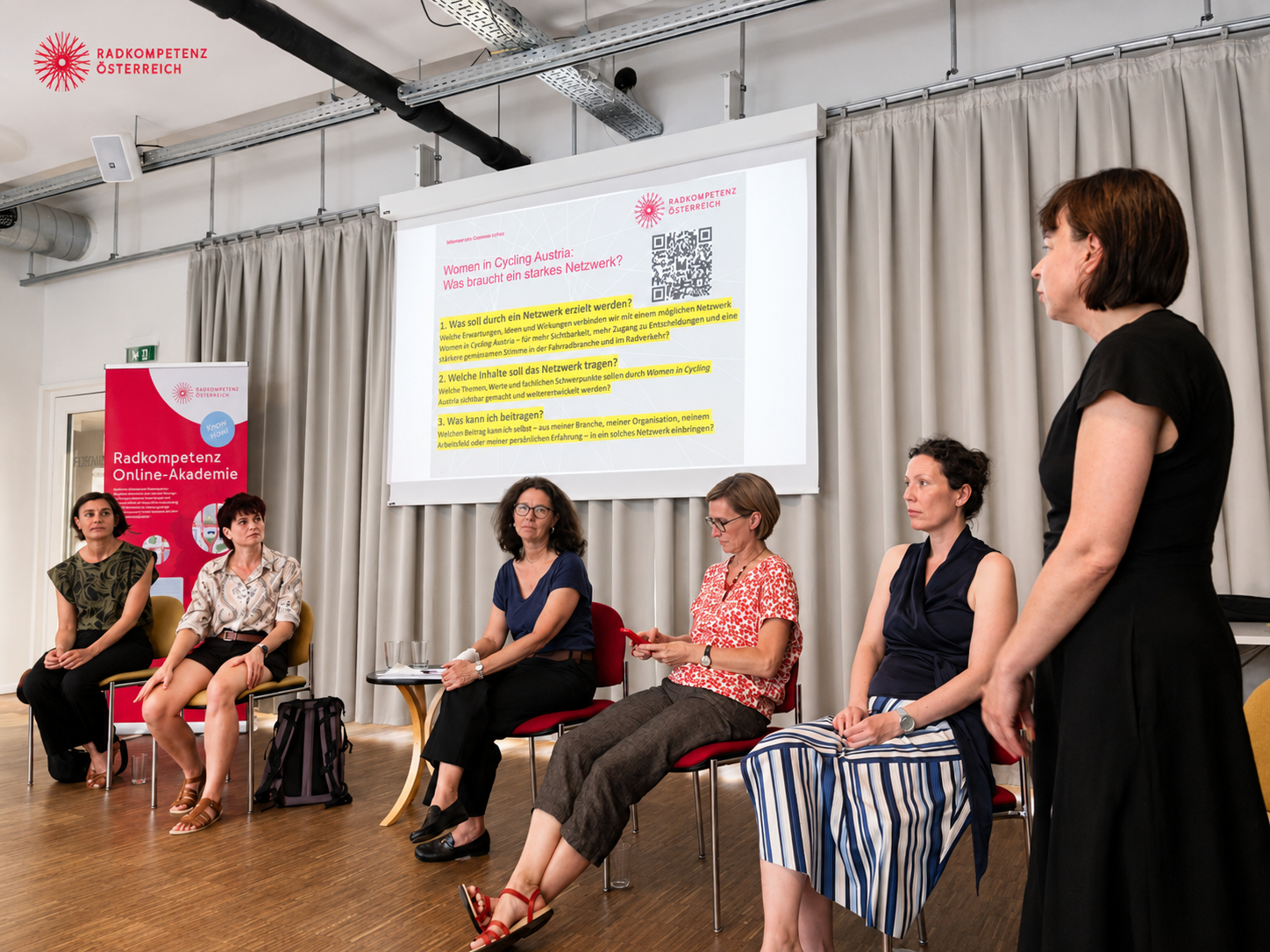
Goal-setting for a women’s network by Irene Wögerer (Cycling Competence Austria).
The vision focuses on enhancing visibility, access, and voice. The network should facilitate exchange, act as a shared platform for influence and public awareness, and cover evidence-based topics such as data, infrastructure, safety, and gender biases in cycling, complemented by critical reflection on existing role models.
Participants emphasised knowledge sharing, role models, and actively spreading insights within their organisations and networks. There was broad agreement that the network should be practice-oriented, knowledge-driven, and impact-focused.
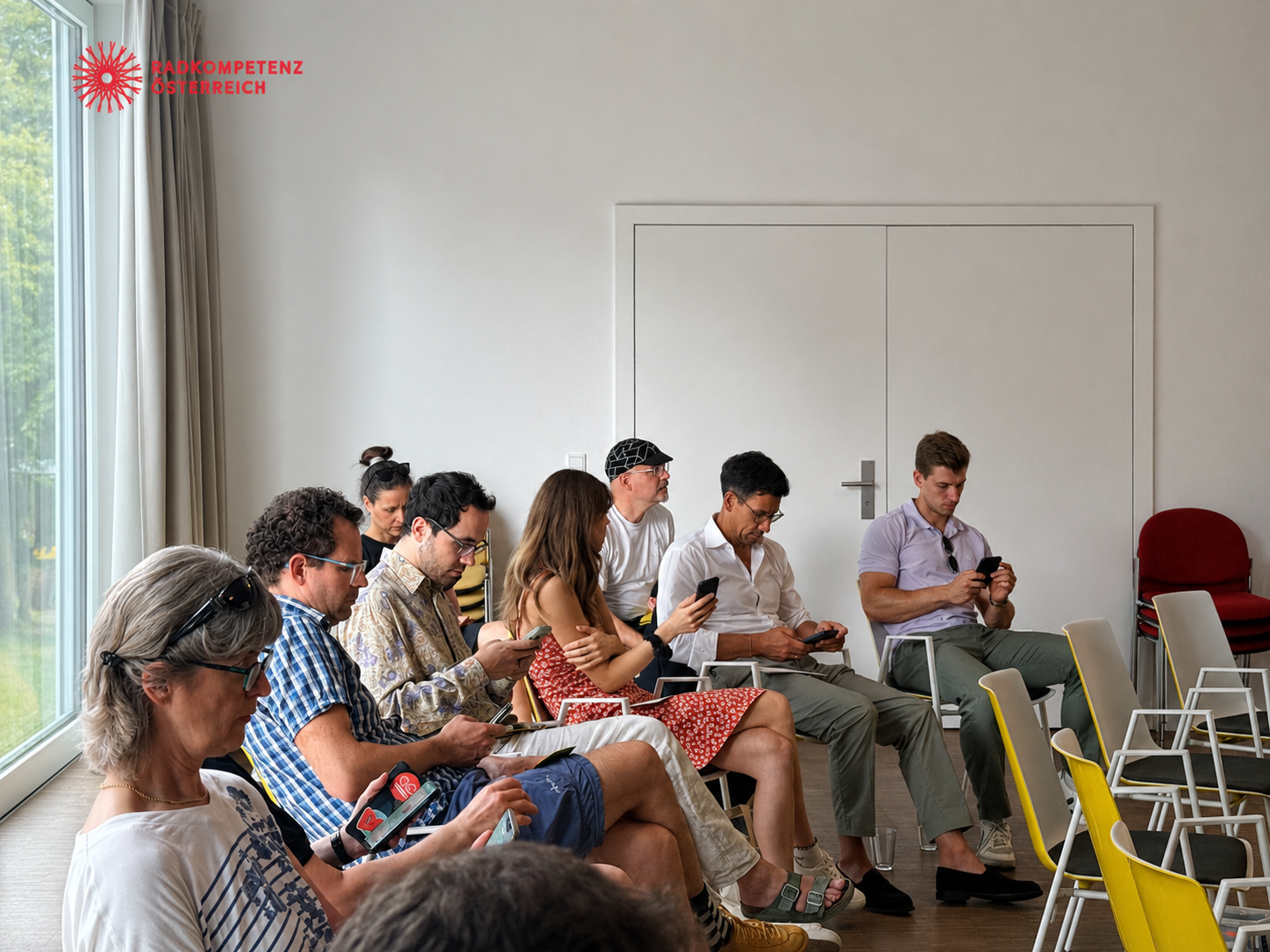
Participants in the Mentimeter survey
Outlook
Through formats such as the Cycling Competence Austria Forum, participants can highlight relevant topics, exchange knowledge, and provide impetus for advancing cycling in Austria.
The next networking event will take place at the Cycling and Walking Summit 2026 in Eisenstadt (9–11 September) on Day 3 (Friday, 11 September, 12:30–14:00): Women in Cycling Austria: First Ride – Networking & Getting Started.
Photos: Irene Wögerer/Radkompetenz Österreich & Margarethe Staudner/Umweltbundesamt
Cycling Competence Members in this article:
BMIMI klimaaktiv mobil,Herry Consult,Klimabündnis Österreich,komobile,Radlobby Austria,Rosinak & Partner,VELLO,Vienna Mobility Agency
More articles with this member:
[crp]
Share this article:
Panel Discussion on Women’s Networks in Cycling in Austria
Share this article:
The annual Cycling Competence Austria Roundtable took place on 23 June in Vienna for the first time as an open forum addressing the visibility and participation of women in the cycling sector and related fields. Under the title “More Women. More Perspectives. More Cycling Competence,” a high-profile panel of experts from Cycling Competence Austria member organisations and invited speakers discussed the role of women in shaping the cycling industry. During the following discussion, participants shared perspectives and explored potential actions to diversify the sector and enhance women’s participation, contributing to increased cycling engagement in Austria.
More Perspectives Lead to Better Decisions
The mobility transition can only succeed if it is inclusive – if all stakeholders are engaged and collaborate to implement solutions to reduce CO₂ emissions in transport. The panel examined how women in the cycling sector are involved in applied product development, target-group-specific planning, and access to decision-making bodies and career paths, drawing insights from multiple professional disciplines.
Women in Cycling Networks Across Europe
Women in Cycling networks are gaining momentum across Europe and neighbouring countries, highlighting the need for greater visibility, representation, and influence of women within the sector. These networks also demonstrate the potential for enhanced participation by women in cycling and the creation of a more diverse and professional industry.
Panel and Experts
Cycling Competence Austria Forum 2026, Verein Gräztelmixer, Vienna (from left to right): Petra Sturm, Elke Schimmel, Katrin Batko, Olivia Kantner, Christine Zopf-Renner, Karin Markvica
Designing cycling infrastructure and structures that meet real-world needs requires shared objectives and collaboration across disciplines. Olivia Kantner, Managing Director and Transport Planner at Cycling Competence Austria member komobile, moderated the discussion with representatives from transport planning, research, industry, public administration, and cultural history.
Key practical questions provided insights into the current status across disciplines and informed the development of recommendations for research, planning, and governance. All participants agreed that considering women’s specific needs is a core quality factor for a robust cycling sector in Austria.
Focus on Practical Insights
The open forum encouraged dialogue and informal networking, enabling participants to exchange ideas with experts from Cycling Competence Austria and external stakeholders. The six panelists shared their perspectives, which were discussed with all participants based on key questions and expectations.
- Elke Schimmel, cycling planner at november:city (Netherlands) and founding member of Women in Cycling Switzerland, presented a European overview using the latest 2025 data on women in the cycling industry (University of Kassel). She emphasised:
“Without women, the cycling sector is not only morally incomplete; it is professionally incomplete.” - Karin Markvica, researcher at Cycling Competence Austria member AIT – Austrian Institute of Technology, Centre for Mobility Systems, highlighted the importance of a holistic approach to data collection and defining key indicators for future mobility and infrastructure measurements.
- Christine Zopf-Renner, Head of the Mobility Centre Burgenland, shared her experiences in male-dominated fields and emphasised the importance of encouraging young women to pursue careers in cycling-related sectors.
- Katrin Batko, Cycling Competence Austria member VELLO Bike, manages brand and product experiences, retail concepts, and product communication, and is also active in product development. She presented her TMBR Scooter project, a functional wooden e-scooter prototype, highlighting gender-equitable mobility, accessible products, and inclusive design principles.
- Petra Sturm, cycling historian, explores feminist perspectives in sports, particularly cycling, and noted that historical women’s biographies often emerge only through external events such as the #MeToo movement, highlighting the importance of preserving these contributions in the societal knowledge base.
Key Discussion Themes
- Where women are visible and influential in the cycling sector
- Where contributions remain largely invisible
- Blind spots in planning, research, administration, industry, and communication
- Gaps between needs and reality – from both users’ and designers’ perspectives
- The role of strategic decisions, budgets, power, and public visibility
The discussion also addressed how networks, invitation practices, and event formats can sustainably empower women and prevent existing structures from repeatedly reproducing the same perspectives.
Audience discussion (from left to right.): Bettina Dornhofer-Pöllinger (Herry Consult), Margarethe Staudner (Umweltbundesamt), Valerie Madeja (Radlobby Austria), Beate Hauser (Goodville Mobility).
Platforms such as Cycling Competence Austria help broaden access, increase visibility, and actively integrate new voices. The aim is to harness diverse perspectives to develop better, more robust solutions for cycling and the cycling sector.
Audience discussion (f.l.t.r.): Luise Lehfeldt (Lease a Bike Austria), Nicole Tippelt (Regionalmanagement OÖ), Alexander Zalokar (Lease a Bike Austria).
Women’s Network in Cycling Austria: Expectations and Potential
Analysis of the key questions from the second part of the panel highlights the envisioned network’s role: pooling expertise, increasing women’s visibility, and strengthening their influence across planning, governance, policy, and industry.
Goal-setting for a women’s network by Irene Wögerer (Cycling Competence Austria).
The vision focuses on enhancing visibility, access, and voice. The network should facilitate exchange, act as a shared platform for influence and public awareness, and cover evidence-based topics such as data, infrastructure, safety, and gender biases in cycling, complemented by critical reflection on existing role models.
Participants emphasised knowledge sharing, role models, and actively spreading insights within their organisations and networks. There was broad agreement that the network should be practice-oriented, knowledge-driven, and impact-focused.
Participants in the Mentimeter survey
Outlook
Through formats such as the Cycling Competence Austria Forum, participants can highlight relevant topics, exchange knowledge, and provide impetus for advancing cycling in Austria.
The next networking event will take place at the Cycling and Walking Summit 2026 in Eisenstadt (9–11 September) on Day 3 (Friday, 11 September, 12:30–14:00): Women in Cycling Austria: First Ride – Networking & Getting Started.
Photos: Irene Wögerer/Radkompetenz Österreich & Margarethe Staudner/Umweltbundesamt
Cycling Competence Members in this article:
BMIMI klimaaktiv mobil,Herry Consult,Klimabündnis Österreich,komobile,Radlobby Austria,Rosinak & Partner,VELLO,Vienna Mobility Agency
More articles with this member:
[crp]