
Expertise at the 2026 Cycling Network Meeting in Upper Austria
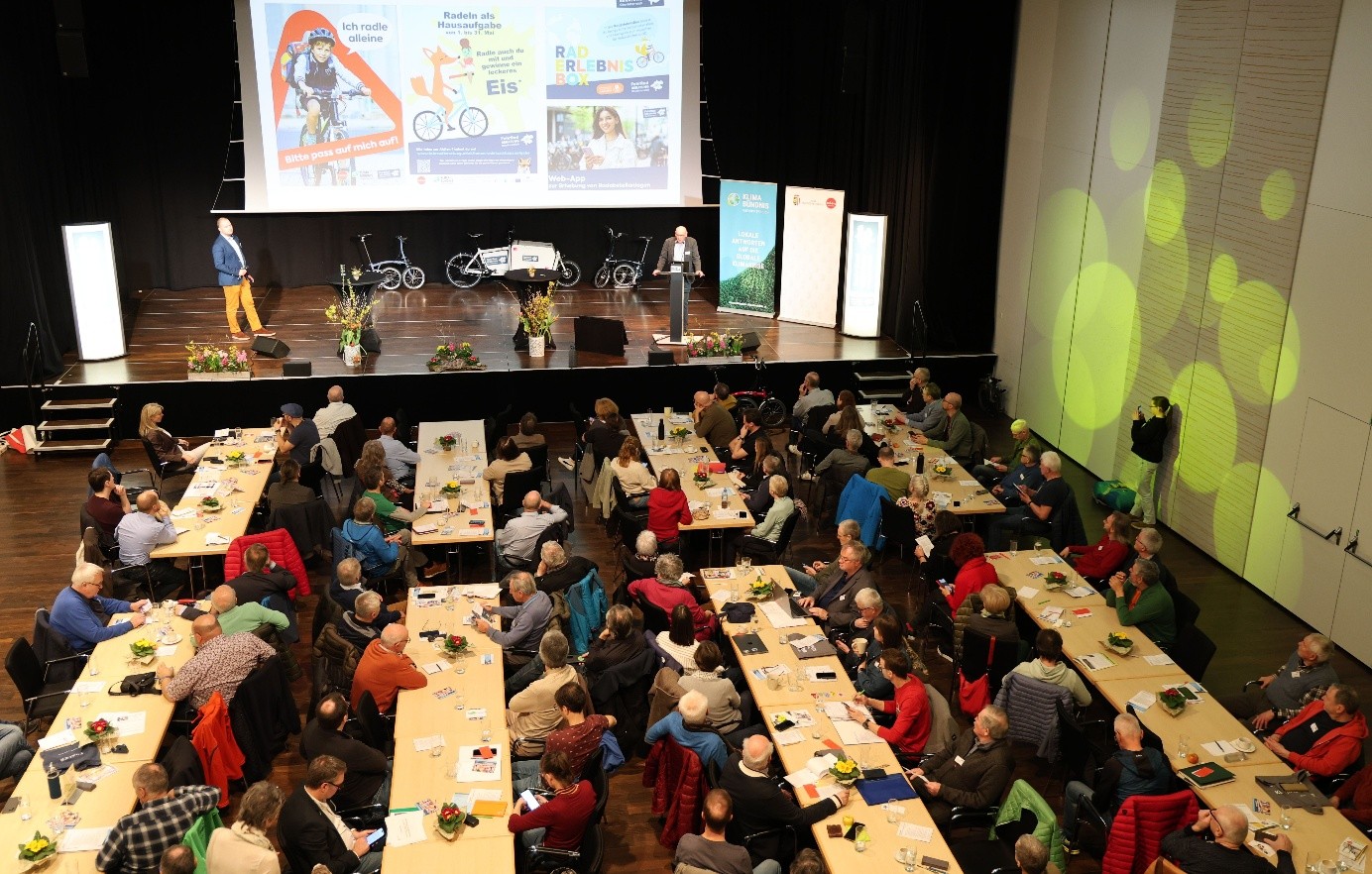
From network planning and traffic calming to cost-effective solutions in rural areas: in early March 2026, the Upper Austria Cycling Network Meeting provided a wealth of inspiration for promoting cycling in local communities. Practical examples from several federal states demonstrated what is possible when projects are implemented with vision, courage and determination, and with the involvement of the local population. Numerous Radkompetenz members were present on stage and in the foyer. We provide an overview of key topics and selected contributions.
Largest event on everyday cycling in Upper Austria
With around 250 participants, the 2026 Upper Austrian Cycling Network Meeting once again demonstrated the significance that professional exchange on everyday cycling has now attained. Organised annually by the Province of Upper Austria and Radkompetenz member Klimabündnis Oberösterreich, the event brings together cycling officers, planners, local councillors and other experts to learn from good examples, take away ideas and discuss practical implementation issues. The combination of networking, practical relevance and expert input, as well as the collegial, motivating atmosphere, make the meeting a highlight of the year for many participants.
Learning from the Netherlands
Elke Schimmel from the november:city office in Utrecht kicked off the programme with her keynote speech, “Cycling for All”. She highlighted what Austria can learn from the Netherlands: in addition to clear design criteria in network planning, she emphasised the importance of forming broad alliances. Strategically focusing on issues such as health, the economy and quality of life in cycling projects often paves the way for successful implementation. Following this, mayors from Pasching and St. Marien presented projects from their municipalities, which offered valuable insights, particularly for representatives of other municipalities. In a clear and entertaining presentation, author Carsten Diekmann demonstrated how cycle-friendly town centres can strengthen local businesses – and how to successfully establish cycle-friendliness as a key economic factor.
A look at the region and beyond
Dorian Vavti, cycling officer for the Province of Upper Austria, and Robert Stögner from the Upper Austrian Climate Alliance provided an overview of current initiatives and projects by FahrRad-Beratung OÖ, as well as updates on cycling at the provincial level – such as the current status of cycle route network planning in Upper Austria.
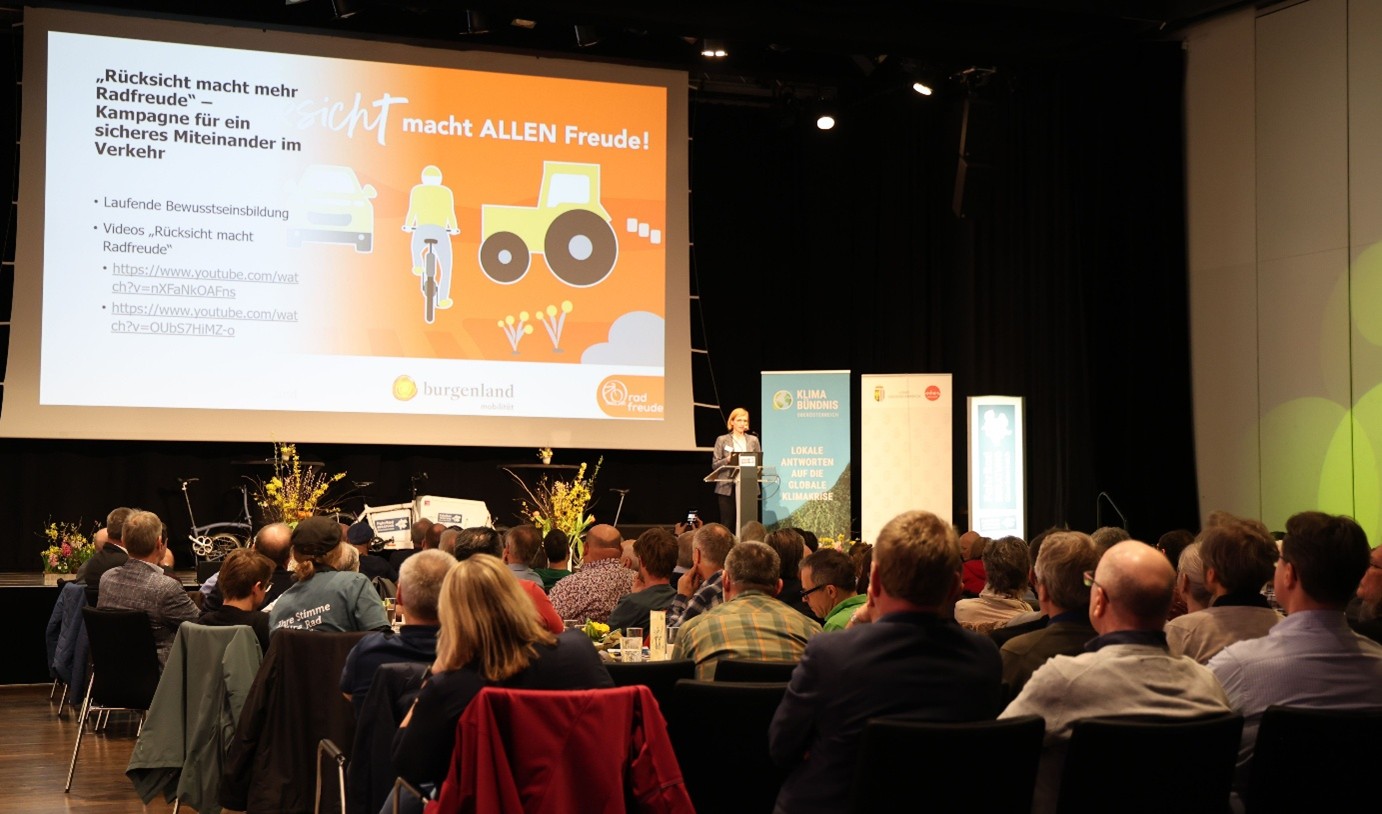
Christine Zopf-Renner, a member of Radkompetenz from the Burgenland Mobility Centre, offered a perspective beyond the region’s borders. Using cycle routes on farm tracks in Burgenland as an example, she demonstrated the potential of this network element for the cost-effective development of the cycle network in rural areas. Aspects such as land conservation and economic feasibility are of particular importance in Upper Austria, a province with a high rate of land sealing and in times of pressure to make savings.
Main cycle route in mixed traffic
Manuel Hammel provided another example of good practice with an illustrative circular tour of St. Pölten. During the redesign of the Promenadenring, which involved Radkompetenz member Rosinak&Partner, multi-purpose lanes in mixed traffic were adopted in favour of enhancing the quality of the public space, despite the initial aim being to separate cycle and motorised traffic. This was underpinned by traffic management measures such as a significant reduction in motor vehicle volumes to a manageable level, as well as the introduction of a 30 km/h speed limit, which enabled safe use of the route.
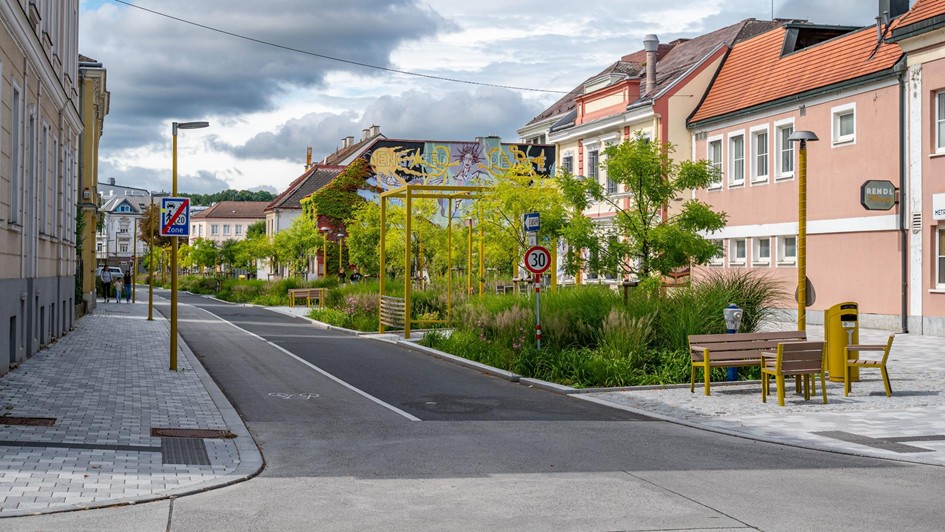
Newly designed Promenadenring in the City of St. Pölten © Christian Krückel, media service, City of St. Pölten
Speed and Quality of Space
How can town centres and main thoroughfares be developed in such a way that they become both safer for cyclists and enhanced as public spaces? This question was the focus of the presentation by Radkompetenz member Alexander Fritz from Verkehrsingenieure. In his presentation “Slower speeds, better quality of stay – examples from Vorarlberg”, he used concrete examples to demonstrate how closely traffic calming measures and the quality of stay are linked. This connection was explored in more depth in a practical workshop that followed. The parallel workshops provided an opportunity for networking and discussion on communication strategies – for example, in the field of social media – as well as on the implementation of cycle route guidance and signage.
Radkompetenz makes its presence felt
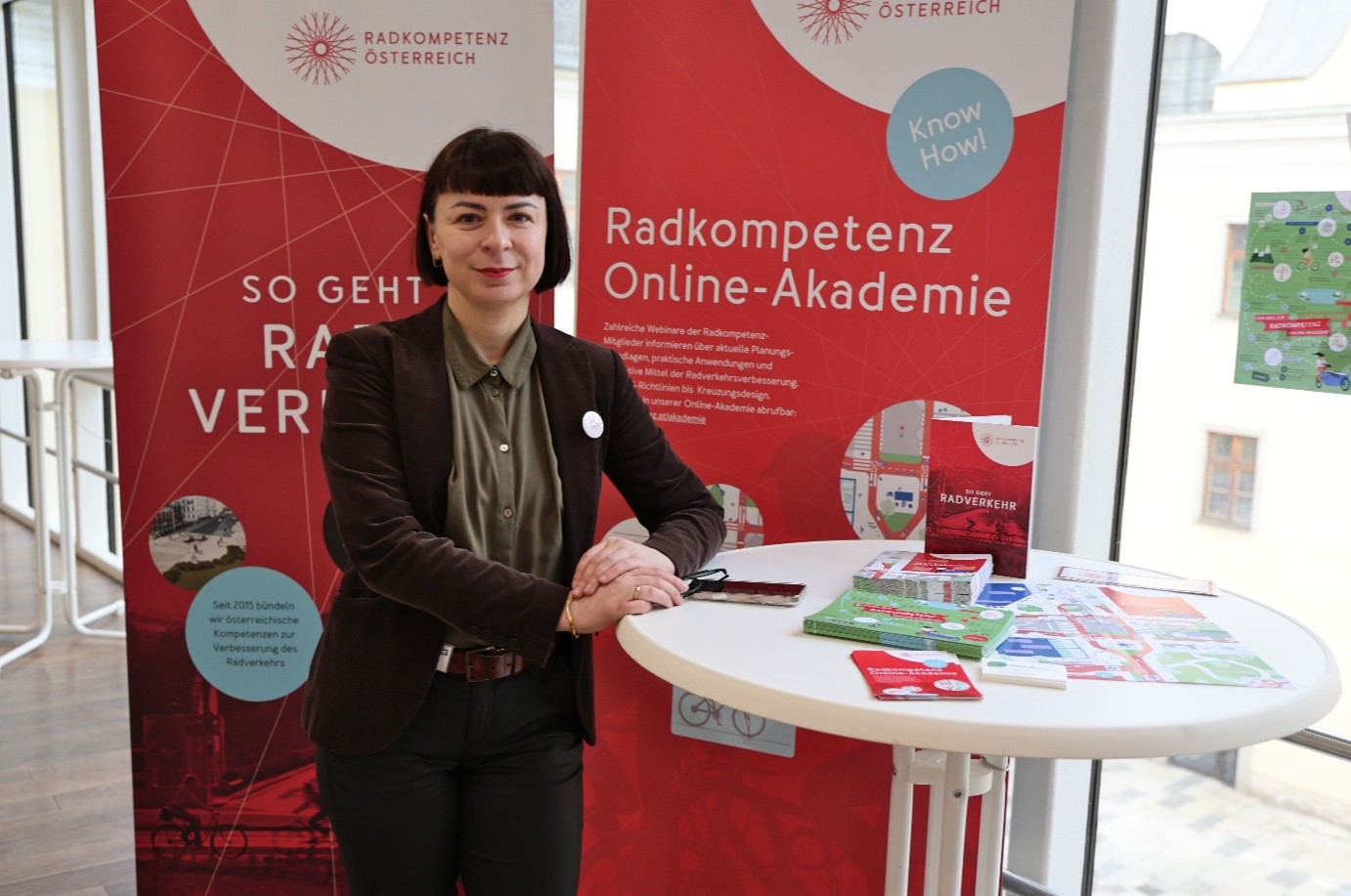
Members of the Radkompetenz platform were also present in the foyer and as sponsors at the cycling networking event: INNOVAMETALL, Velovio Bicycle Furniture and Ziegler Außenanlagen took part in the prize draw for local authority prizes and each provided a bicycle parking facility – a practical contribution that was particularly appreciated by the participating local authorities. Radkompetenz coordinator Irene Wögerer presented the Radkompetenz Online Academy:
A boost from the network
The lively and enthusiastic atmosphere at what is now the 15th Cycling Network Meeting clearly demonstrated just how much the FahrRad-Beratung Upper Austria network has grown. Once the consultation has concluded, cycling officers, mayors and administrative staff remain in contact with FahrRad Beratung as part of the network, take advantage of further training opportunities and drive projects forward together. This sense of community is palpable at the Cycling Network Meeting. For many committed stakeholders, the meeting is not only motivating but also serves as a concrete catalyst for local implementation.
A look back at the 2026 Cycling Network Meeting, with presentations available at www.fahrradberatung.at
More photos from the 2026 Cycling Network Meeting can be found here in the Flickr album
Photos: Tanja Obernberger, Climate Alliance Upper Austria
Cycling Competence Members in this article:
More articles with this member:
[crp]
Share this article:
Expertise at the 2026 Cycling Network Meeting in Upper Austria
Share this article:
From network planning and traffic calming to cost-effective solutions in rural areas: in early March 2026, the Upper Austria Cycling Network Meeting provided a wealth of inspiration for promoting cycling in local communities. Practical examples from several federal states demonstrated what is possible when projects are implemented with vision, courage and determination, and with the involvement of the local population. Numerous Radkompetenz members were present on stage and in the foyer. We provide an overview of key topics and selected contributions.
Largest event on everyday cycling in Upper Austria
With around 250 participants, the 2026 Upper Austrian Cycling Network Meeting once again demonstrated the significance that professional exchange on everyday cycling has now attained. Organised annually by the Province of Upper Austria and Radkompetenz member Klimabündnis Oberösterreich, the event brings together cycling officers, planners, local councillors and other experts to learn from good examples, take away ideas and discuss practical implementation issues. The combination of networking, practical relevance and expert input, as well as the collegial, motivating atmosphere, make the meeting a highlight of the year for many participants.
Learning from the Netherlands
Elke Schimmel from the november:city office in Utrecht kicked off the programme with her keynote speech, “Cycling for All”. She highlighted what Austria can learn from the Netherlands: in addition to clear design criteria in network planning, she emphasised the importance of forming broad alliances. Strategically focusing on issues such as health, the economy and quality of life in cycling projects often paves the way for successful implementation. Following this, mayors from Pasching and St. Marien presented projects from their municipalities, which offered valuable insights, particularly for representatives of other municipalities. In a clear and entertaining presentation, author Carsten Diekmann demonstrated how cycle-friendly town centres can strengthen local businesses – and how to successfully establish cycle-friendliness as a key economic factor.
A look at the region and beyond
Dorian Vavti, cycling officer for the Province of Upper Austria, and Robert Stögner from the Upper Austrian Climate Alliance provided an overview of current initiatives and projects by FahrRad-Beratung OÖ, as well as updates on cycling at the provincial level – such as the current status of cycle route network planning in Upper Austria.
Christine Zopf-Renner, a member of Radkompetenz from the Burgenland Mobility Centre, offered a perspective beyond the region’s borders. Using cycle routes on farm tracks in Burgenland as an example, she demonstrated the potential of this network element for the cost-effective development of the cycle network in rural areas. Aspects such as land conservation and economic feasibility are of particular importance in Upper Austria, a province with a high rate of land sealing and in times of pressure to make savings.
Main cycle route in mixed traffic
Manuel Hammel provided another example of good practice with an illustrative circular tour of St. Pölten. During the redesign of the Promenadenring, which involved Radkompetenz member Rosinak&Partner, multi-purpose lanes in mixed traffic were adopted in favour of enhancing the quality of the public space, despite the initial aim being to separate cycle and motorised traffic. This was underpinned by traffic management measures such as a significant reduction in motor vehicle volumes to a manageable level, as well as the introduction of a 30 km/h speed limit, which enabled safe use of the route.
Newly designed Promenadenring in the City of St. Pölten © Christian Krückel, media service, City of St. Pölten
Speed and Quality of Space
How can town centres and main thoroughfares be developed in such a way that they become both safer for cyclists and enhanced as public spaces? This question was the focus of the presentation by Radkompetenz member Alexander Fritz from Verkehrsingenieure. In his presentation “Slower speeds, better quality of stay – examples from Vorarlberg”, he used concrete examples to demonstrate how closely traffic calming measures and the quality of stay are linked. This connection was explored in more depth in a practical workshop that followed. The parallel workshops provided an opportunity for networking and discussion on communication strategies – for example, in the field of social media – as well as on the implementation of cycle route guidance and signage.
Radkompetenz makes its presence felt
Members of the Radkompetenz platform were also present in the foyer and as sponsors at the cycling networking event: INNOVAMETALL, Velovio Bicycle Furniture and Ziegler Außenanlagen took part in the prize draw for local authority prizes and each provided a bicycle parking facility – a practical contribution that was particularly appreciated by the participating local authorities. Radkompetenz coordinator Irene Wögerer presented the Radkompetenz Online Academy:
A boost from the network
The lively and enthusiastic atmosphere at what is now the 15th Cycling Network Meeting clearly demonstrated just how much the FahrRad-Beratung Upper Austria network has grown. Once the consultation has concluded, cycling officers, mayors and administrative staff remain in contact with FahrRad Beratung as part of the network, take advantage of further training opportunities and drive projects forward together. This sense of community is palpable at the Cycling Network Meeting. For many committed stakeholders, the meeting is not only motivating but also serves as a concrete catalyst for local implementation.
A look back at the 2026 Cycling Network Meeting, with presentations available at www.fahrradberatung.at
More photos from the 2026 Cycling Network Meeting can be found here in the Flickr album
Photos: Tanja Obernberger, Climate Alliance Upper Austria
Cycling Competence Members in this article:
More articles with this member:
[crp]