
Austria’s best cycling infrastructure solutions
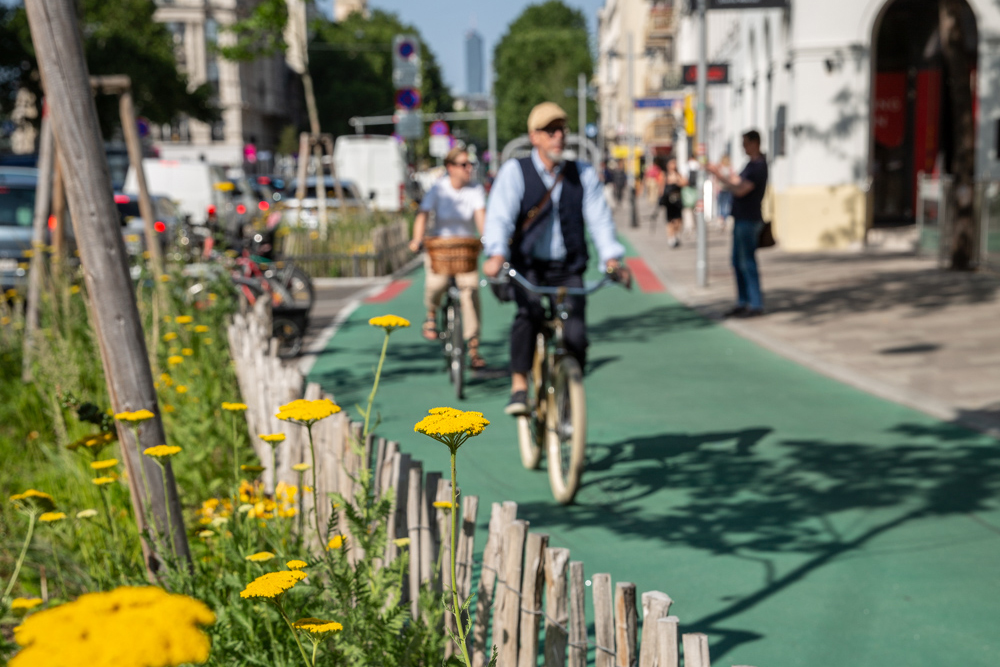
Developing good cycling projects requires outstanding role models. Until a few years ago, these were found in the Netherlands or Denmark – but Austria now has a number of standout examples of its own. In this compilation, we present a selection of the best cycling solutions implemented in Austria to date. This collection is not a ranking, but offers a brief insight into where these flagship projects can be viewed and what makes them stand out.
We are keen to include a wide geographical spread and examples from numerous categories that demonstrate different approaches. This first instalment brings together seven projects from Carinthia, Styria, Tyrol and Vienna. We are constantly expanding the selection and welcome suggestions for projects that should be included in this collection.
Radhighway | Praterstraße, Vienna
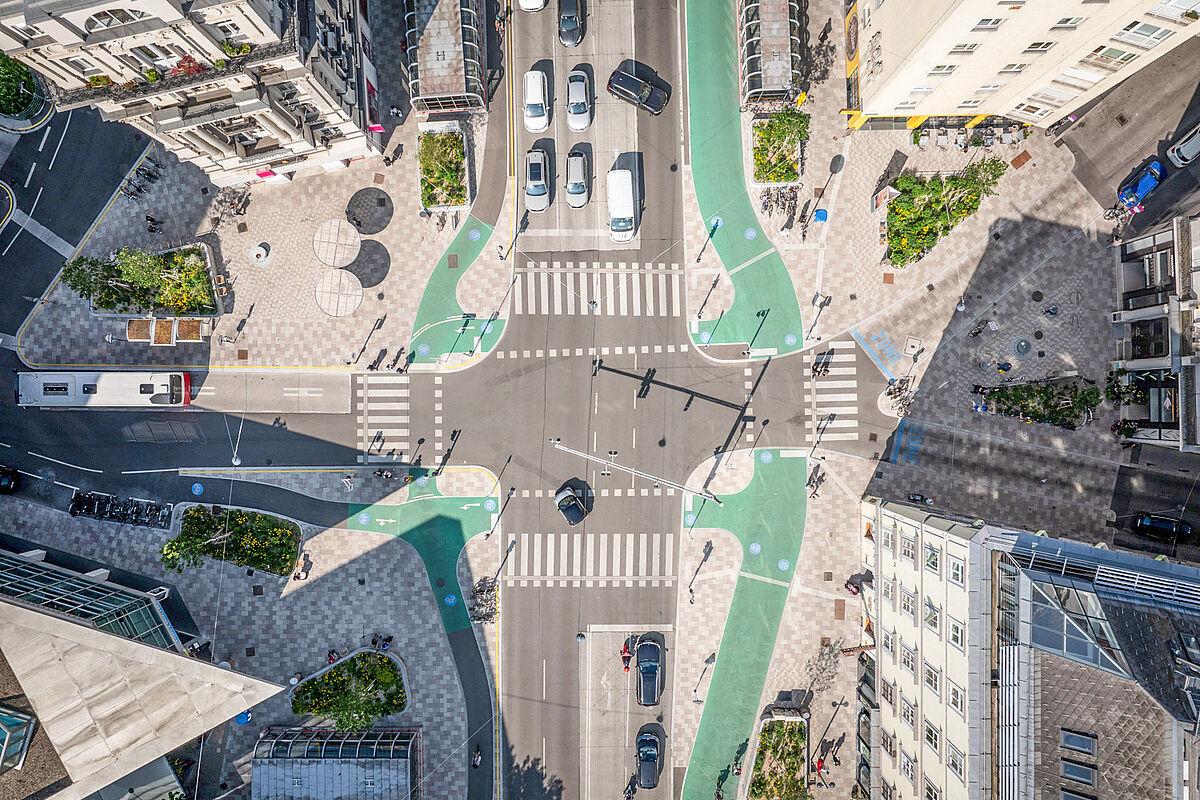
Praterstraße in Vienna’s 2nd district was redesigned as a climate-resilient urban boulevard and completed in 2024. It features a two-way cycle path up to 4.5 metres wide, well-designed junctions, plenty of additional greenery and an inviting atmosphere for walking and lingering. Praterstraße forms part of the Radhighway Nord, Vienna’s seven-kilometre northern cycle highway linking the city centre with Kagran. The climate-friendly redesign was awarded second place in the 2026 Austrian State Prize for Climate Change Adaptation and was also recognised at the 2025 VCÖ Mobility Award.
Further links: Fahrrad Wien, con.sens, 3zu0 | Location: Googlemaps | Photo: 3zu0/Kurt Höbst
Combined cycle bridge | Jauntal Bridge, Carinthia
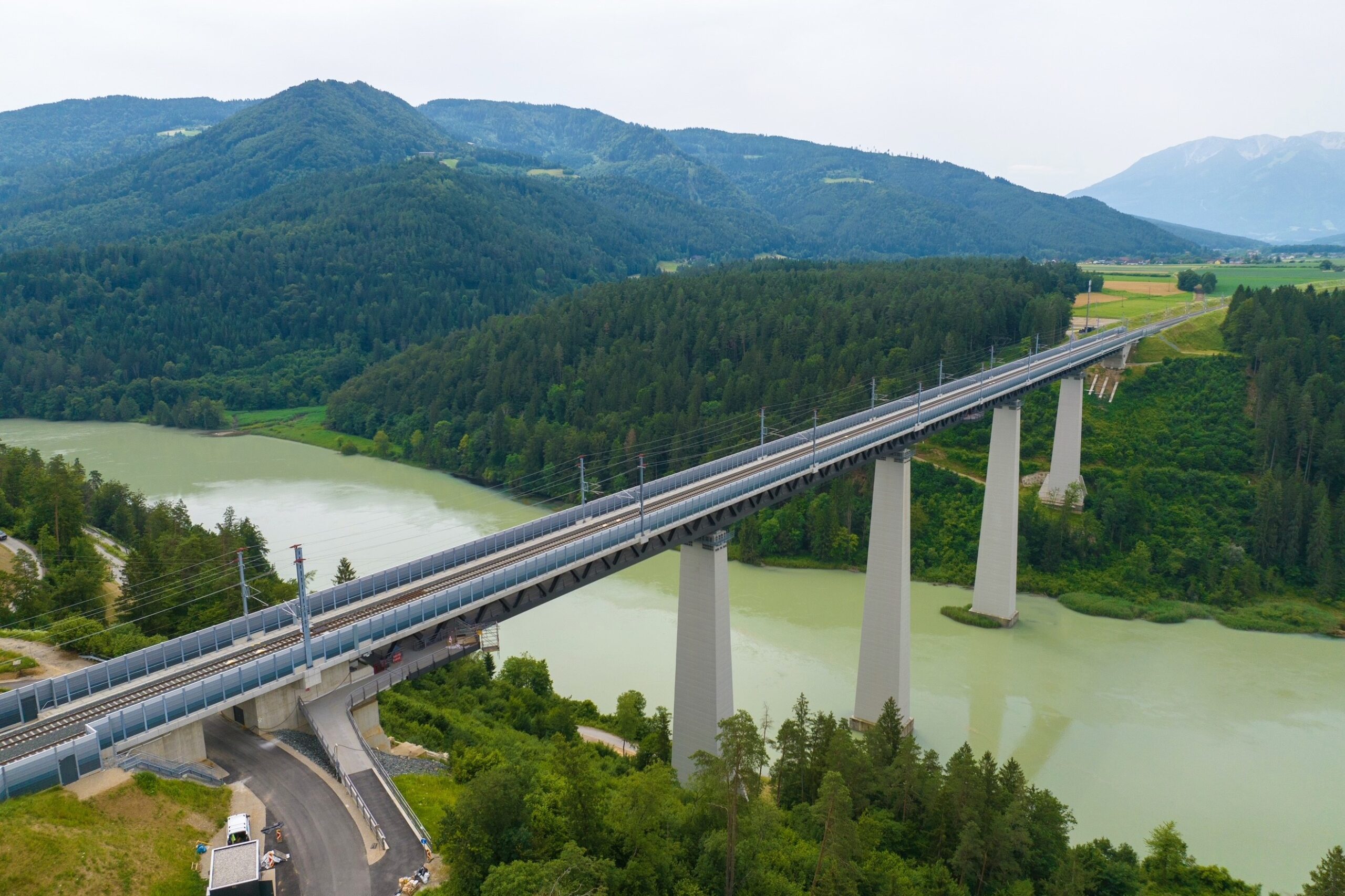
At the end of 2023, ÖBB commissioned the modernised Jauntal Bridge on the Koralm Railway in Carinthia, one of Europe’s highest railway bridges, following a two-year upgrade. Equipped with a new double-track composite superstructure, the bridge is designed for train speeds of up to 250 km/h. In 2024, the final works on the new pedestrian and cycle deck beneath the railway structure were also completed. The crossing reconnects this section of the Drau Cycle Route and includes a newly built viewing platform offering spectacular views from almost 100 metres above the Drau.
Further links: ÖBB | Location: Googlemaps | Photo: ÖBB/emedia
Station design | Fritzens Wattens, Tyrol
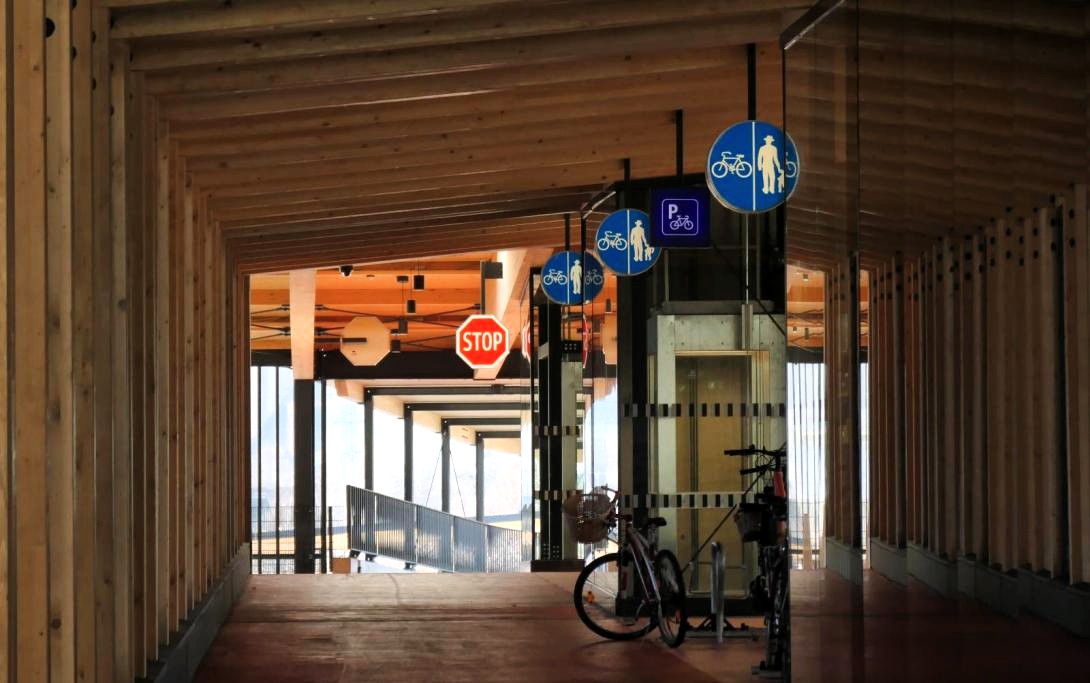
Completed in 2026, the Fritzens-Wattens station demonstrates what is possible when cycling is planned from the outset as a natural part of modern infrastructure. The station features clear wayfinding, barrier-free access via four lifts, two spacious island platforms and a combined cycle and pedestrian bridge that serves as the central connecting level. A total of 160 Bike+Ride spaces complete the intermodal hub.
Further links: Radlobby Tirol, ÖBB | Location: Googlemaps | Photo: Radlobby Tirol
Station underpass | Lienz, East Tyrol
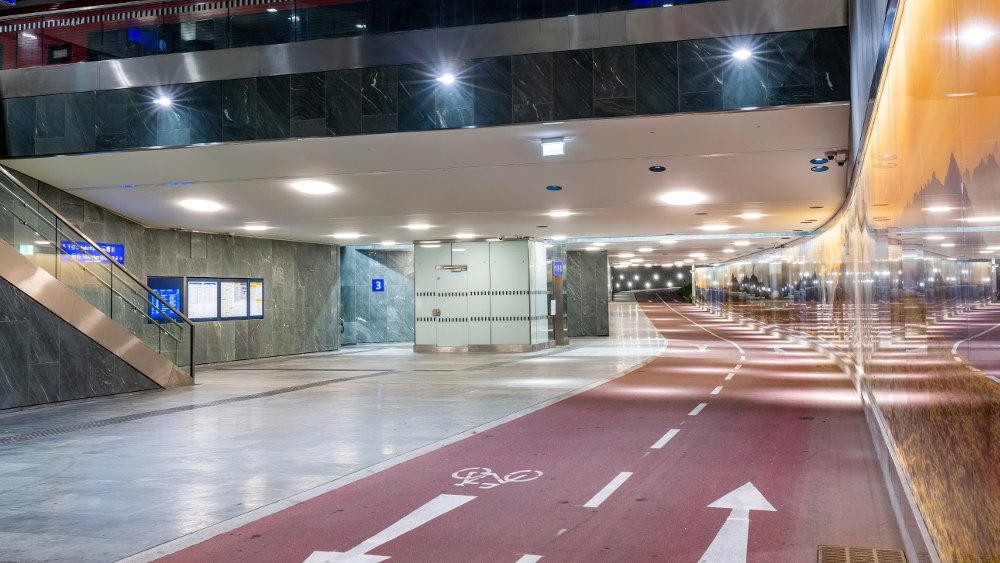
Completed in 2022, the pedestrian and cycle underpass connects the southern outskirts with Lienz town centre, whilst also providing barrier-free access to the train platforms. Generous widths, natural light and gentle ramps ensure a high level of comfort for pedestrians and cyclists. The underpass crosses the railway line and the busy B100, allowing cyclists to reach the traffic-calmed city centre without having to stop at traffic lights.
Further links: ÖBB, con.sens | Location: Googlemaps | Photo: ÖBB/Brunner
Cycle street | Argentinierstraße, Vienna
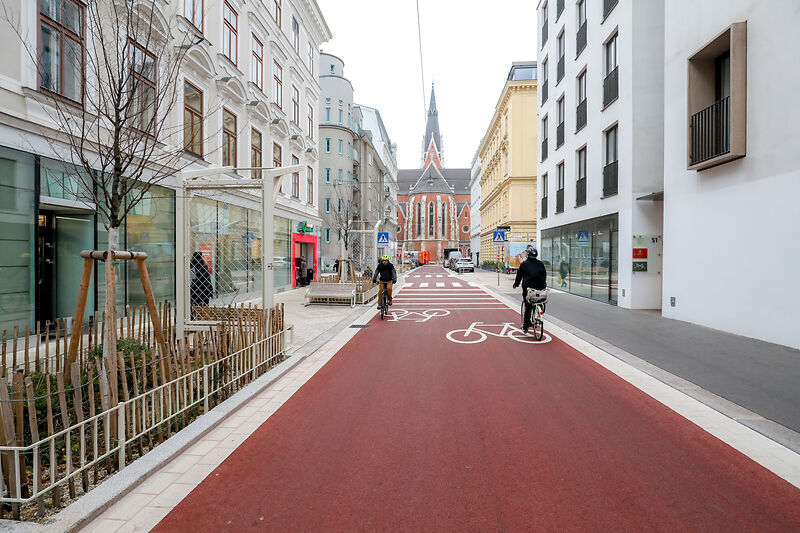
The redevelopment of the 1.3-kilometre-long Argentinierstraße was completed in December 2024 after around a year of construction. This key north-south route in Vienna’s 4th district connects Karlsplatz with the main railway station and has been transformed into a green, traffic-calmed bicycle street modelled on the Dutch approach. Quality of life has been improved through extensive greening and climate-adaptation measures, including 70 new trees, around 100 planting beds, reduced sealed surfaces, traffic calming and more space for pedestrians. More than 10,000 local residents were involved in the planning process beforehand. The project won the 2023 VCÖ Mobility Award.
Further links: Fahrrad Wien, Stadt Wien, Rosinak & Partner | Location: Googlemaps | Photo: Stadt Wien/Christian Fürthner
Cycle street | Obere Neutorgasse, Graz
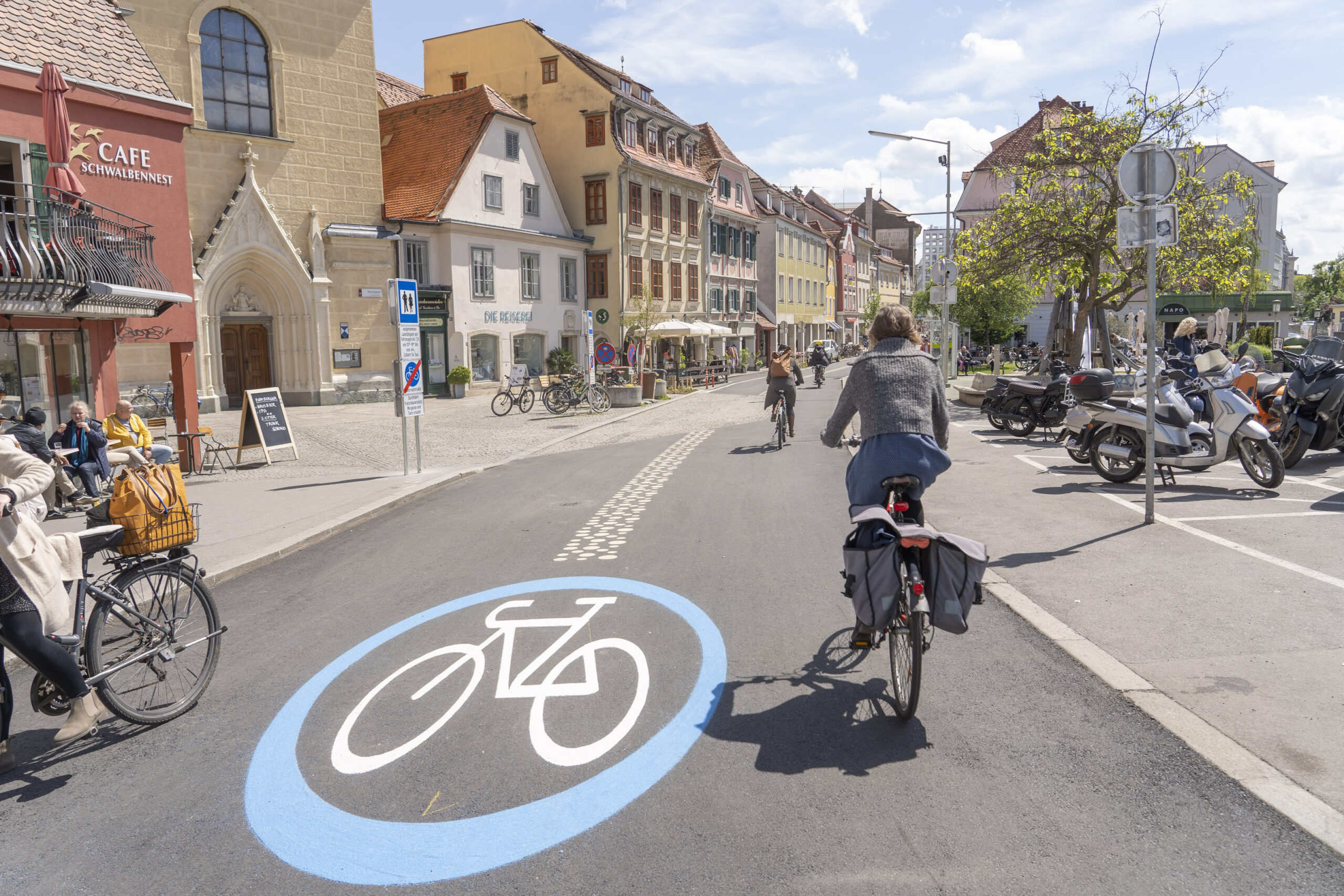
In spring 2024, a cycle street was created on Obere Neutorgasse between Andreas-Hofer-Platz and Murgasse within a short construction period and using cost-effective measures. Within the existing street profile and while retaining the kerb lines, moving and stationary traffic was reorganised, with seven new trees and perennial beds added. Road markings indicate a central reservation and guide both cycle and motor vehicle traffic. The cycle street now forms a planted and furnished public space in the old town and connects to the cycle paths in Neutorgasse and along Joanneumring.
Further links: Stadt Graz, VCÖ | Location: Googlemaps | Photo: Foto Fischer
Bicycle garage, residential development | The Marks, Vienna
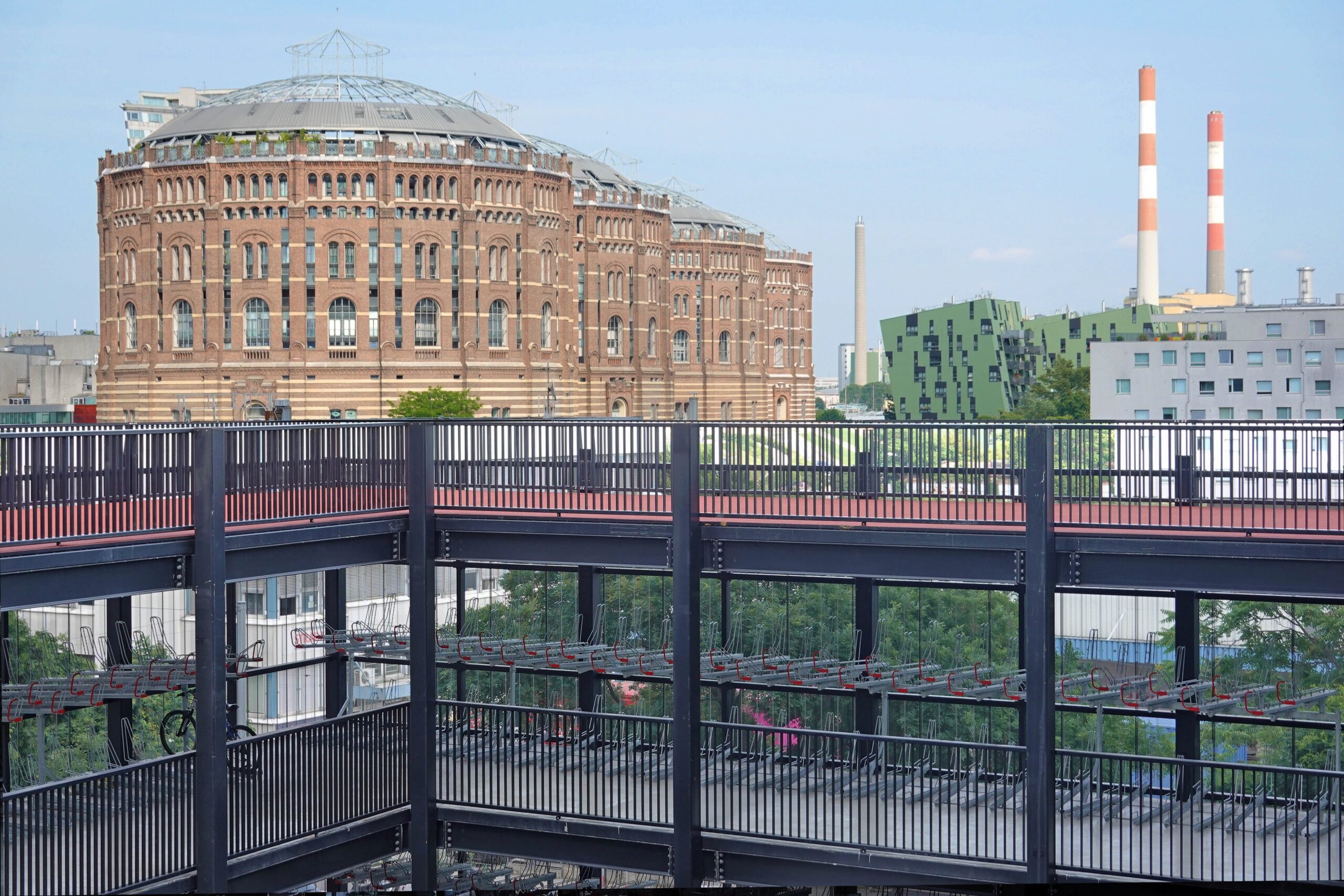
Located between Vienna’s Südosttangente motorway and the Gasometer, the residential complex “The Marks” in Vienna’s 3rd district was completed in 2023. Comprising three residential towers over 120 metres high, the complex is not only a landmark visible from afar, but also home to Vienna’s largest bicycle garage. Thanks to an innovative multi-level design, around 2,200 bicycle parking spaces have been created across several floors. The three high-rise buildings share a common base zone, which accommodates various communal areas as well as the bicycle parking spaces within a steel structure. This arcade-style solution provides a roof over all three bicycle parking levels, which are equipped with double-decker racks and bicycle stands.
Further links: Radkompetenz-Artikel | Location: Googlemaps | Photo: Radkompetenz/Alec Hager
Note on the selection of projects
As mentioned above, this selection is not exhaustive but is intended as the starting point for a growing collection. We welcome suggestions for suitable projects at buero@radkompetenz.at. The collected examples will be submitted by the Radkompetenz editorial team to an independent expert panel for selection. The panel consists of three representatives from the Ministry of Mobility, the Austrian Cycling Lobby and Climate Alliance. Whether Radkompetenz members were involved in commissioning, planning or implementing the projects is expressly not a selection criterion.
Cycling Competence Members in this article:
More articles with this member:
[crp]
Share this article:
Austria’s best cycling infrastructure solutions
Share this article:
Developing good cycling projects requires outstanding role models. Until a few years ago, these were found in the Netherlands or Denmark – but Austria now has a number of standout examples of its own. In this compilation, we present a selection of the best cycling solutions implemented in Austria to date. This collection is not a ranking, but offers a brief insight into where these flagship projects can be viewed and what makes them stand out.
We are keen to include a wide geographical spread and examples from numerous categories that demonstrate different approaches. This first instalment brings together seven projects from Carinthia, Styria, Tyrol and Vienna. We are constantly expanding the selection and welcome suggestions for projects that should be included in this collection.
Radhighway | Praterstraße, Vienna
Praterstraße in Vienna’s 2nd district was redesigned as a climate-resilient urban boulevard and completed in 2024. It features a two-way cycle path up to 4.5 metres wide, well-designed junctions, plenty of additional greenery and an inviting atmosphere for walking and lingering. Praterstraße forms part of the Radhighway Nord, Vienna’s seven-kilometre northern cycle highway linking the city centre with Kagran. The climate-friendly redesign was awarded second place in the 2026 Austrian State Prize for Climate Change Adaptation and was also recognised at the 2025 VCÖ Mobility Award.
Further links: Fahrrad Wien, con.sens, 3zu0 | Location: Googlemaps | Photo: 3zu0/Kurt Höbst
Combined cycle bridge | Jauntal Bridge, Carinthia
At the end of 2023, ÖBB commissioned the modernised Jauntal Bridge on the Koralm Railway in Carinthia, one of Europe’s highest railway bridges, following a two-year upgrade. Equipped with a new double-track composite superstructure, the bridge is designed for train speeds of up to 250 km/h. In 2024, the final works on the new pedestrian and cycle deck beneath the railway structure were also completed. The crossing reconnects this section of the Drau Cycle Route and includes a newly built viewing platform offering spectacular views from almost 100 metres above the Drau.
Further links: ÖBB | Location: Googlemaps | Photo: ÖBB/emedia
Station design | Fritzens Wattens, Tyrol
Completed in 2026, the Fritzens-Wattens station demonstrates what is possible when cycling is planned from the outset as a natural part of modern infrastructure. The station features clear wayfinding, barrier-free access via four lifts, two spacious island platforms and a combined cycle and pedestrian bridge that serves as the central connecting level. A total of 160 Bike+Ride spaces complete the intermodal hub.
Further links: Radlobby Tirol, ÖBB | Location: Googlemaps | Photo: Radlobby Tirol
Station underpass | Lienz, East Tyrol
Completed in 2022, the pedestrian and cycle underpass connects the southern outskirts with Lienz town centre, whilst also providing barrier-free access to the train platforms. Generous widths, natural light and gentle ramps ensure a high level of comfort for pedestrians and cyclists. The underpass crosses the railway line and the busy B100, allowing cyclists to reach the traffic-calmed city centre without having to stop at traffic lights.
Further links: ÖBB, con.sens | Location: Googlemaps | Photo: ÖBB/Brunner
Cycle street | Argentinierstraße, Vienna
The redevelopment of the 1.3-kilometre-long Argentinierstraße was completed in December 2024 after around a year of construction. This key north-south route in Vienna’s 4th district connects Karlsplatz with the main railway station and has been transformed into a green, traffic-calmed bicycle street modelled on the Dutch approach. Quality of life has been improved through extensive greening and climate-adaptation measures, including 70 new trees, around 100 planting beds, reduced sealed surfaces, traffic calming and more space for pedestrians. More than 10,000 local residents were involved in the planning process beforehand. The project won the 2023 VCÖ Mobility Award.
Further links: Fahrrad Wien, Stadt Wien, Rosinak & Partner | Location: Googlemaps | Photo: Stadt Wien/Christian Fürthner
Cycle street | Obere Neutorgasse, Graz
In spring 2024, a cycle street was created on Obere Neutorgasse between Andreas-Hofer-Platz and Murgasse within a short construction period and using cost-effective measures. Within the existing street profile and while retaining the kerb lines, moving and stationary traffic was reorganised, with seven new trees and perennial beds added. Road markings indicate a central reservation and guide both cycle and motor vehicle traffic. The cycle street now forms a planted and furnished public space in the old town and connects to the cycle paths in Neutorgasse and along Joanneumring.
Further links: Stadt Graz, VCÖ | Location: Googlemaps | Photo: Foto Fischer
Bicycle garage, residential development | The Marks, Vienna
Located between Vienna’s Südosttangente motorway and the Gasometer, the residential complex “The Marks” in Vienna’s 3rd district was completed in 2023. Comprising three residential towers over 120 metres high, the complex is not only a landmark visible from afar, but also home to Vienna’s largest bicycle garage. Thanks to an innovative multi-level design, around 2,200 bicycle parking spaces have been created across several floors. The three high-rise buildings share a common base zone, which accommodates various communal areas as well as the bicycle parking spaces within a steel structure. This arcade-style solution provides a roof over all three bicycle parking levels, which are equipped with double-decker racks and bicycle stands.
Further links: Radkompetenz-Artikel | Location: Googlemaps | Photo: Radkompetenz/Alec Hager
Note on the selection of projects
As mentioned above, this selection is not exhaustive but is intended as the starting point for a growing collection. We welcome suggestions for suitable projects at buero@radkompetenz.at. The collected examples will be submitted by the Radkompetenz editorial team to an independent expert panel for selection. The panel consists of three representatives from the Ministry of Mobility, the Austrian Cycling Lobby and Climate Alliance. Whether Radkompetenz members were involved in commissioning, planning or implementing the projects is expressly not a selection criterion.
Cycling Competence Members in this article:
More articles with this member:
[crp]