
30 km/h Speed Limits in Austrian Municipalities: Evidence and Practice
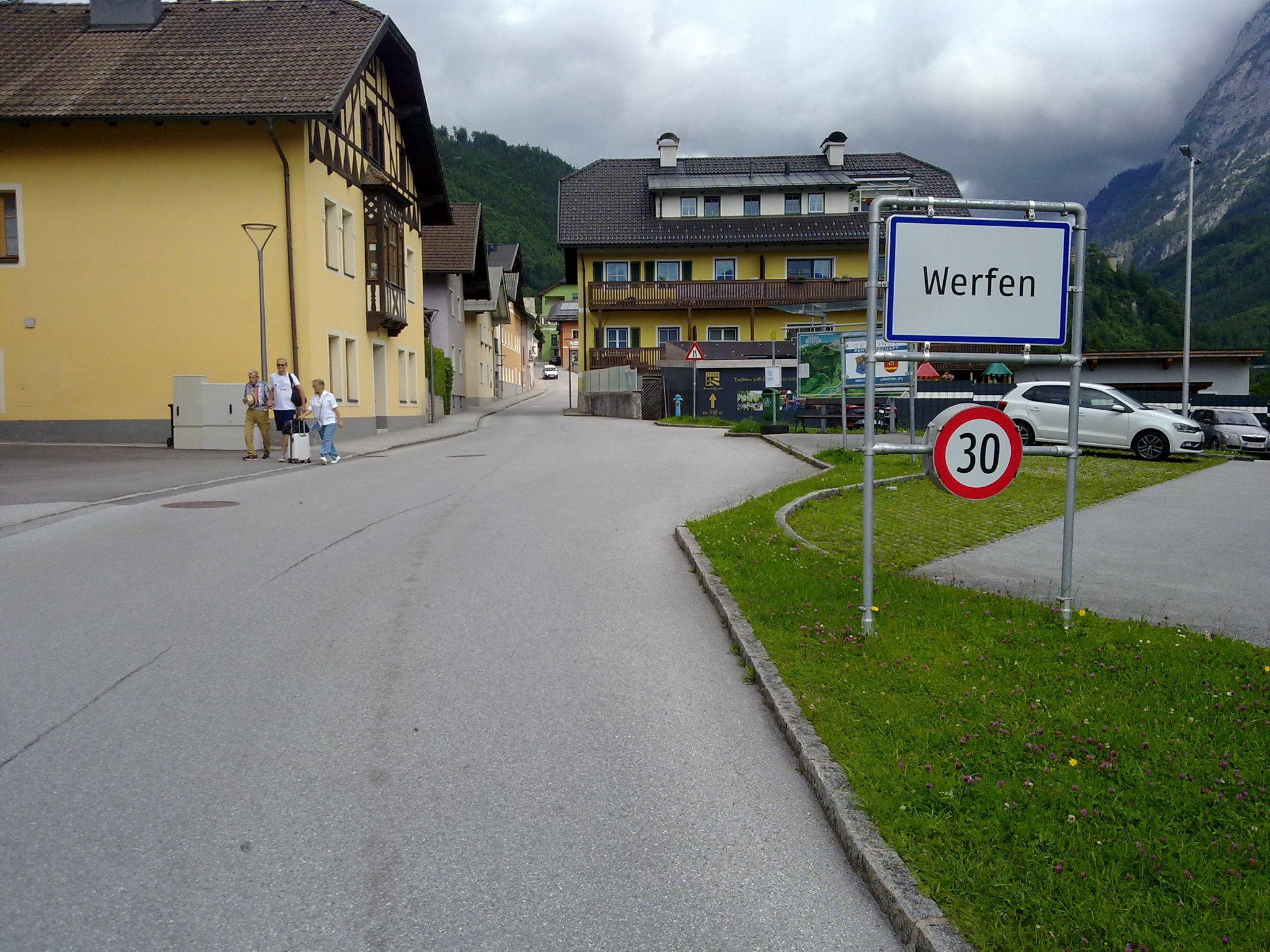
Speed reduction is a key measure for improving road safety for all road users – with particularly strong benefits for people walking and cycling. The Radkompetenz member Radlobby Austria documents examples of municipalities with 30 km/h speed limits in its collection “Tempo-30-Orte”. The updated dataset now includes 386 municipalities and shows that area-wide speed reductions have already been implemented in practice across Austria for thirty years. The collection makes existing solutions visible and provides orientation for municipalities considering the introduction of 30 km/h speed limits in built-up areas.
Why traffic calming? Key arguments for 30 km/h
- Road safety: 30 km/h significantly reduces both crash risk and crash severity. A 2024 evaluation of 40 European cities reports an average reduction of 23% in road crashes, 37% in road fatalities, and 38% in serious injuries following the introduction of city-wide 30 km/h speed limits. Lower speeds give all road users more time to perceive others and respond to potential hazards. At the same time, braking distance is reduced by almost two-thirds compared to 50 km/h. In the event of a collision between motor vehicles and pedestrians or cyclists, survival rates are significantly higher at 30 km/h than at 50 km/h.
- Enabling cycling in mixed traffic: At 30 km/h, cycling can generally be integrated into mixed traffic with motor vehicles on the carriageway. Austrian design guidelines (RVS 03.02.13 “Cycling”) identify vehicle speed and traffic volume as key criteria for choosing between segregated and mixed traffic solutions. Large speed differentials between cyclists and motorised traffic increase risk in shared environments. Lowering speeds to 30 km/h reduces this differential and creates better conditions for safe and compatible mixed traffic – provided traffic volumes and heavy vehicle shares are appropriate.
- More liveable public space: Lower speeds reduce noise, improve conditions for street crossing, and create opportunities for a different allocation of street space. Where lower speeds allow narrower carriageway design, additional space can be reallocated – for example to wider sidewalks or increased greenery.
- Increased active mobility: Many people would like to cycle but feel unsafe in traffic. 30 km/h improves conditions for cycling by reducing perceived and actual risk. When walking and cycling are experienced as safe and comfortable, more people choose active mobility. This supports public health and reduces exposure to harmful emissions.
- Cost efficiency:For municipalities, implementing 30 km/h is a comparatively low-cost measure to promote cycling. A 2023 study commissioned by all Austrian federal states and the Federal Ministry (BMK), “Investment Needs for Cycling Infrastructure”, estimates that approximately 7 billion euros would be required to double cycling levels nationwide. This calculation generally assumes 30 km/h speed limits in residential street networks. Without this assumption, significantly higher infrastructure investments would be required to ensure safe cycling conditions.
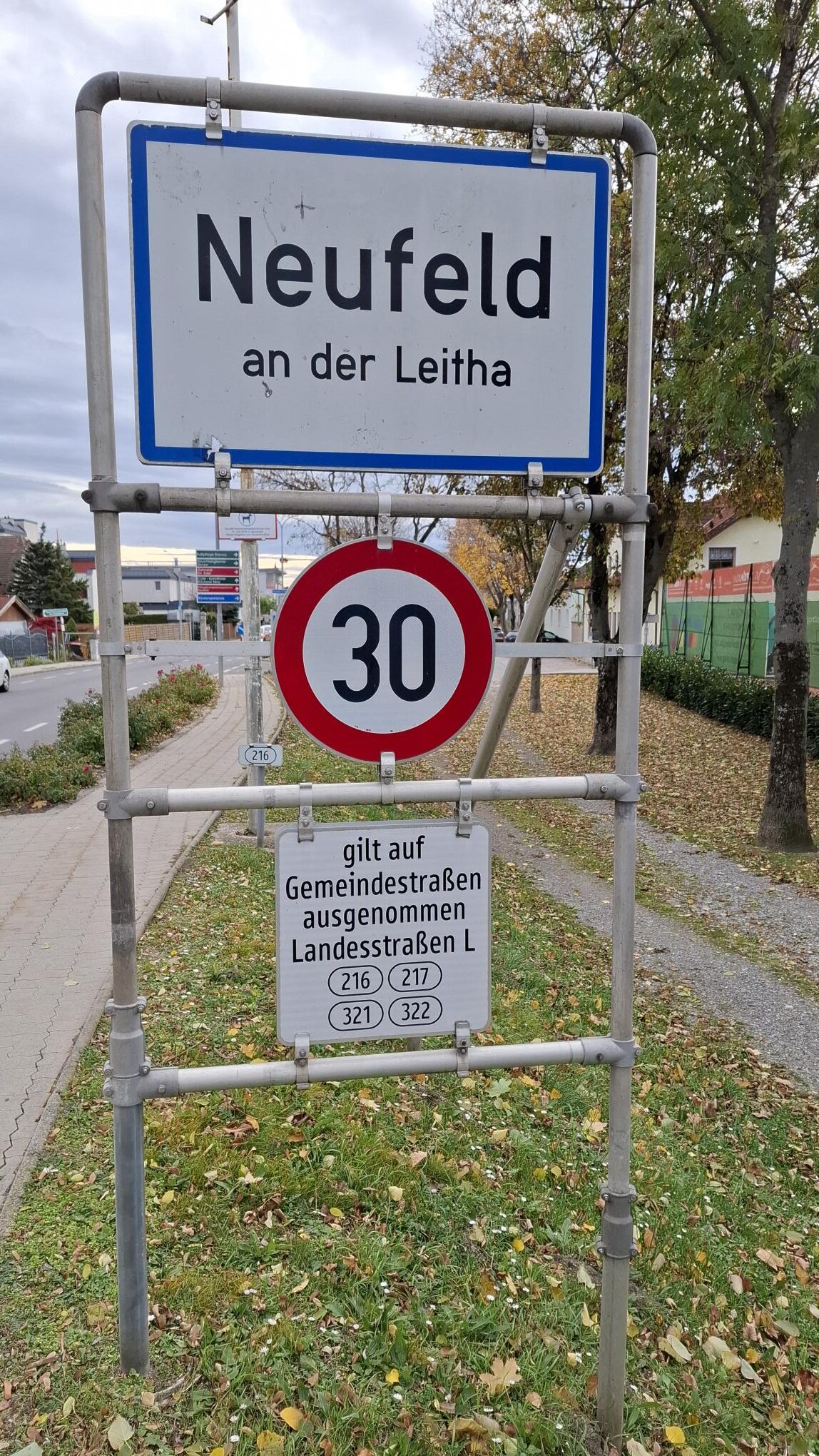
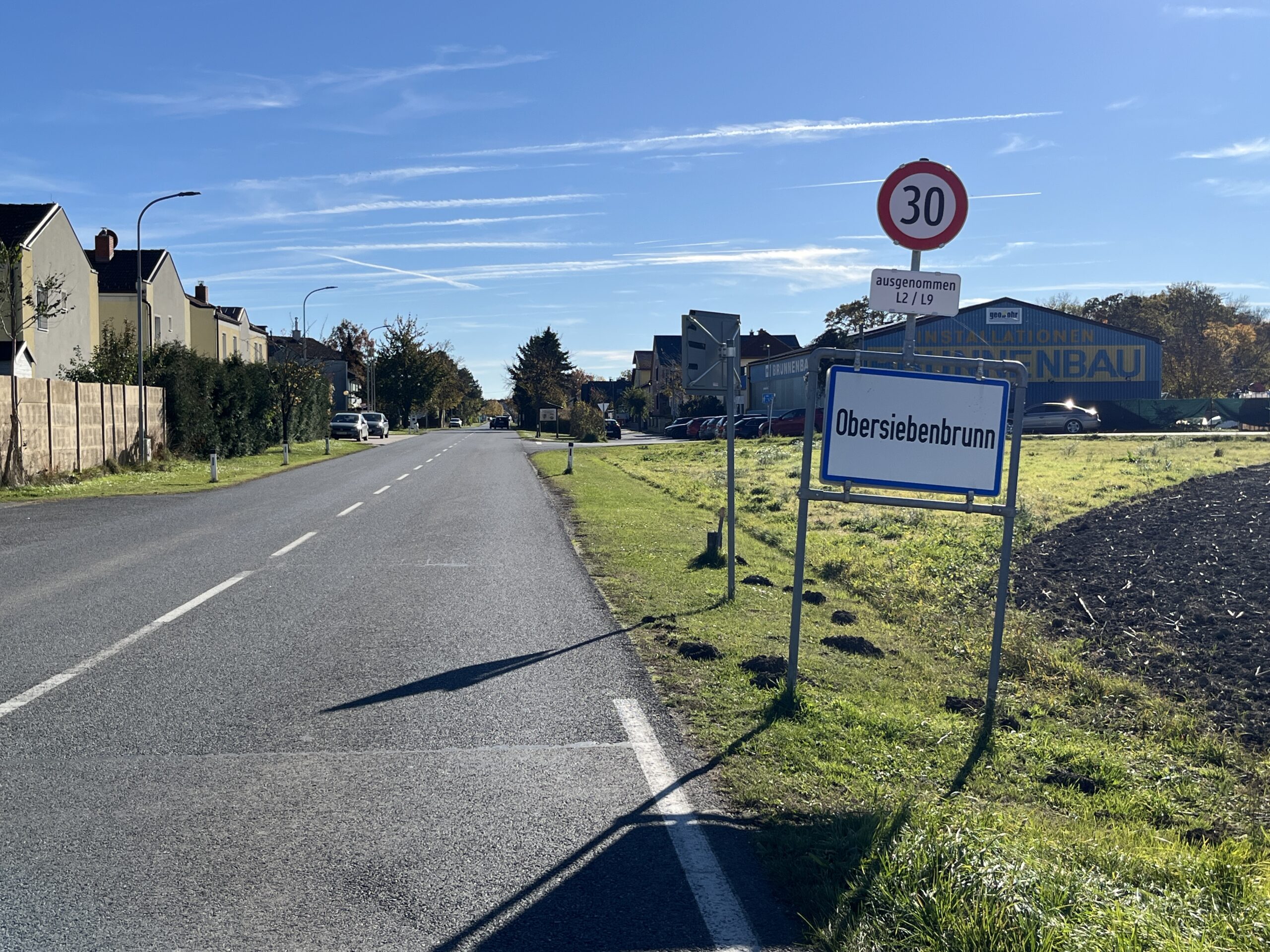
Speed limits in Austria are communicated via regulatory signs placed in combination with the town entry sign. Exceptions for individual roads or road types must be indicated using supplementary signage.
Regulatory framework for 30 km/h zones
The implementation of 30 km/h in Austria depends on the responsible authority and the regulatory instrument applied. Options include area-wide limits for entire settlements (§ 20(2a) Austrian Road Traffic Act – StVO), sectoral or zonal measures (§ 43 StVO), bicycle streets (§ 67 StVO), or shared space / encounter zones (§ 76c StVO).
For a detailed overview of regulatory options, the Radkompetenz Academy recommends webinar 26: “Wie geht Tempo 30?” (How to implement 30 km/h?) (webinar in German language)
Following the 35th amendment to the Austrian StVO, municipalities can now more easily introduce lower speed limits in areas with specific protection needs. This facilitates speed reductions around schools, kindergartens, recreational facilities, or care homes. However, area-wide 30 km/h schemes – as documented in the “Tempo-30-Orte” collection – still require regulation under § 20(2a) StVO.
Area-wide 30 km/h limits have been legally possible since 1994. They are implemented by combining the speed limit sign directly with the town entry sign. Exceptions for specific roads or road types must be defined via supplementary signage.
386 practical examples from across Austria
The collection shows that area-wide speed reductions are already implemented in nearly 400 municipalities across Austria. Of the 386 municipalities included, 325 have introduced 30 km/h limits across the entire settlement area, while 61 have implemented 40 km/h schemes.
Area-wide 30 km/h does not necessarily mean that all roads within a municipality are treated equally. Main roads, regional roads, or specifically defined corridors are often excluded and indicated via supplementary signage at the town boundary. The examples demonstrate that municipalities apply different design approaches and adapt regulations to local conditions. They provide valuable guidance for municipalities, as they are based on real-world implementation experience – often from comparable regional contexts.
Link to the collection: www.radlobby.at/temposchutz
Radlobby Austria’s “Tempo 30 Orte” database does not claim to be exhaustive – additional locations can be submitted via radlobby.at/mitmachen
Photos: Radlobby Austria, Stefan Haider, Philipp Schober
Cycling Competence Members in this article:
More articles with this member:
[crp]
Share this article:
30 km/h Speed Limits in Austrian Municipalities: Evidence and Practice
Share this article:
Speed reduction is a key measure for improving road safety for all road users – with particularly strong benefits for people walking and cycling. The Radkompetenz member Radlobby Austria documents examples of municipalities with 30 km/h speed limits in its collection “Tempo-30-Orte”. The updated dataset now includes 386 municipalities and shows that area-wide speed reductions have already been implemented in practice across Austria for thirty years. The collection makes existing solutions visible and provides orientation for municipalities considering the introduction of 30 km/h speed limits in built-up areas.
Why traffic calming? Key arguments for 30 km/h
- Road safety: 30 km/h significantly reduces both crash risk and crash severity. A 2024 evaluation of 40 European cities reports an average reduction of 23% in road crashes, 37% in road fatalities, and 38% in serious injuries following the introduction of city-wide 30 km/h speed limits. Lower speeds give all road users more time to perceive others and respond to potential hazards. At the same time, braking distance is reduced by almost two-thirds compared to 50 km/h. In the event of a collision between motor vehicles and pedestrians or cyclists, survival rates are significantly higher at 30 km/h than at 50 km/h.
- Enabling cycling in mixed traffic: At 30 km/h, cycling can generally be integrated into mixed traffic with motor vehicles on the carriageway. Austrian design guidelines (RVS 03.02.13 “Cycling”) identify vehicle speed and traffic volume as key criteria for choosing between segregated and mixed traffic solutions. Large speed differentials between cyclists and motorised traffic increase risk in shared environments. Lowering speeds to 30 km/h reduces this differential and creates better conditions for safe and compatible mixed traffic – provided traffic volumes and heavy vehicle shares are appropriate.
- More liveable public space: Lower speeds reduce noise, improve conditions for street crossing, and create opportunities for a different allocation of street space. Where lower speeds allow narrower carriageway design, additional space can be reallocated – for example to wider sidewalks or increased greenery.
- Increased active mobility: Many people would like to cycle but feel unsafe in traffic. 30 km/h improves conditions for cycling by reducing perceived and actual risk. When walking and cycling are experienced as safe and comfortable, more people choose active mobility. This supports public health and reduces exposure to harmful emissions.
- Cost efficiency:For municipalities, implementing 30 km/h is a comparatively low-cost measure to promote cycling. A 2023 study commissioned by all Austrian federal states and the Federal Ministry (BMK), “Investment Needs for Cycling Infrastructure”, estimates that approximately 7 billion euros would be required to double cycling levels nationwide. This calculation generally assumes 30 km/h speed limits in residential street networks. Without this assumption, significantly higher infrastructure investments would be required to ensure safe cycling conditions.
Speed limits in Austria are communicated via regulatory signs placed in combination with the town entry sign. Exceptions for individual roads or road types must be indicated using supplementary signage.
Regulatory framework for 30 km/h zones
The implementation of 30 km/h in Austria depends on the responsible authority and the regulatory instrument applied. Options include area-wide limits for entire settlements (§ 20(2a) Austrian Road Traffic Act – StVO), sectoral or zonal measures (§ 43 StVO), bicycle streets (§ 67 StVO), or shared space / encounter zones (§ 76c StVO).
For a detailed overview of regulatory options, the Radkompetenz Academy recommends webinar 26: “Wie geht Tempo 30?” (How to implement 30 km/h?) (webinar in German language)
Following the 35th amendment to the Austrian StVO, municipalities can now more easily introduce lower speed limits in areas with specific protection needs. This facilitates speed reductions around schools, kindergartens, recreational facilities, or care homes. However, area-wide 30 km/h schemes – as documented in the “Tempo-30-Orte” collection – still require regulation under § 20(2a) StVO.
Area-wide 30 km/h limits have been legally possible since 1994. They are implemented by combining the speed limit sign directly with the town entry sign. Exceptions for specific roads or road types must be defined via supplementary signage.
386 practical examples from across Austria
The collection shows that area-wide speed reductions are already implemented in nearly 400 municipalities across Austria. Of the 386 municipalities included, 325 have introduced 30 km/h limits across the entire settlement area, while 61 have implemented 40 km/h schemes.
Area-wide 30 km/h does not necessarily mean that all roads within a municipality are treated equally. Main roads, regional roads, or specifically defined corridors are often excluded and indicated via supplementary signage at the town boundary. The examples demonstrate that municipalities apply different design approaches and adapt regulations to local conditions. They provide valuable guidance for municipalities, as they are based on real-world implementation experience – often from comparable regional contexts.
Link to the collection: www.radlobby.at/temposchutz
Radlobby Austria’s “Tempo 30 Orte” database does not claim to be exhaustive – additional locations can be submitted via radlobby.at/mitmachen
Photos: Radlobby Austria, Stefan Haider, Philipp Schober
Cycling Competence Members in this article:
More articles with this member:
[crp]